CHEMISTRY · IONIC BONDING
Salt From Poison
Follow along with your worksheet, one question at a time.
mrsajdak.com/salt
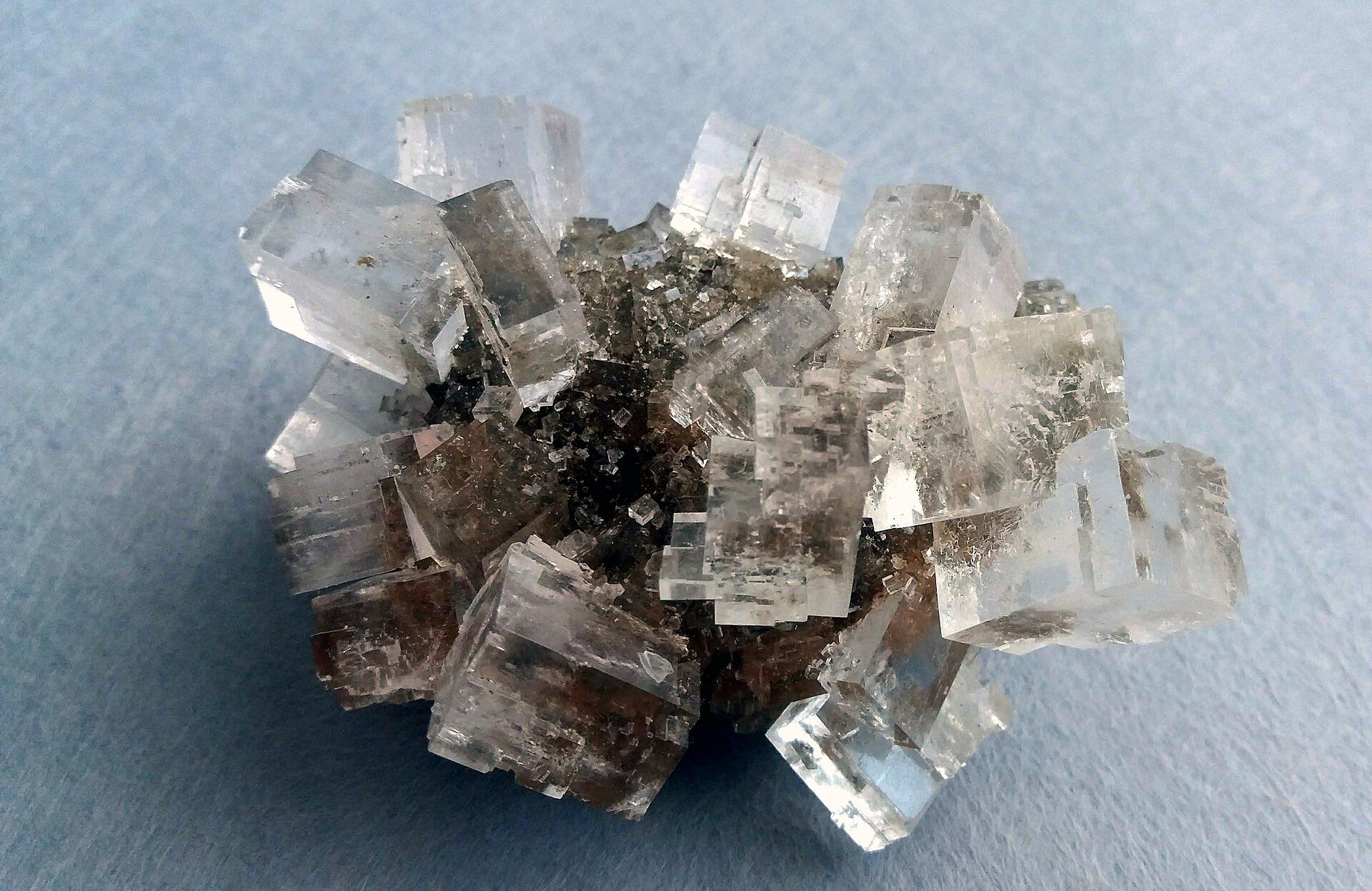
Photo: IvanSakhno, CC BY 4.0
BEFORE YOU START
What goes in, and what comes out
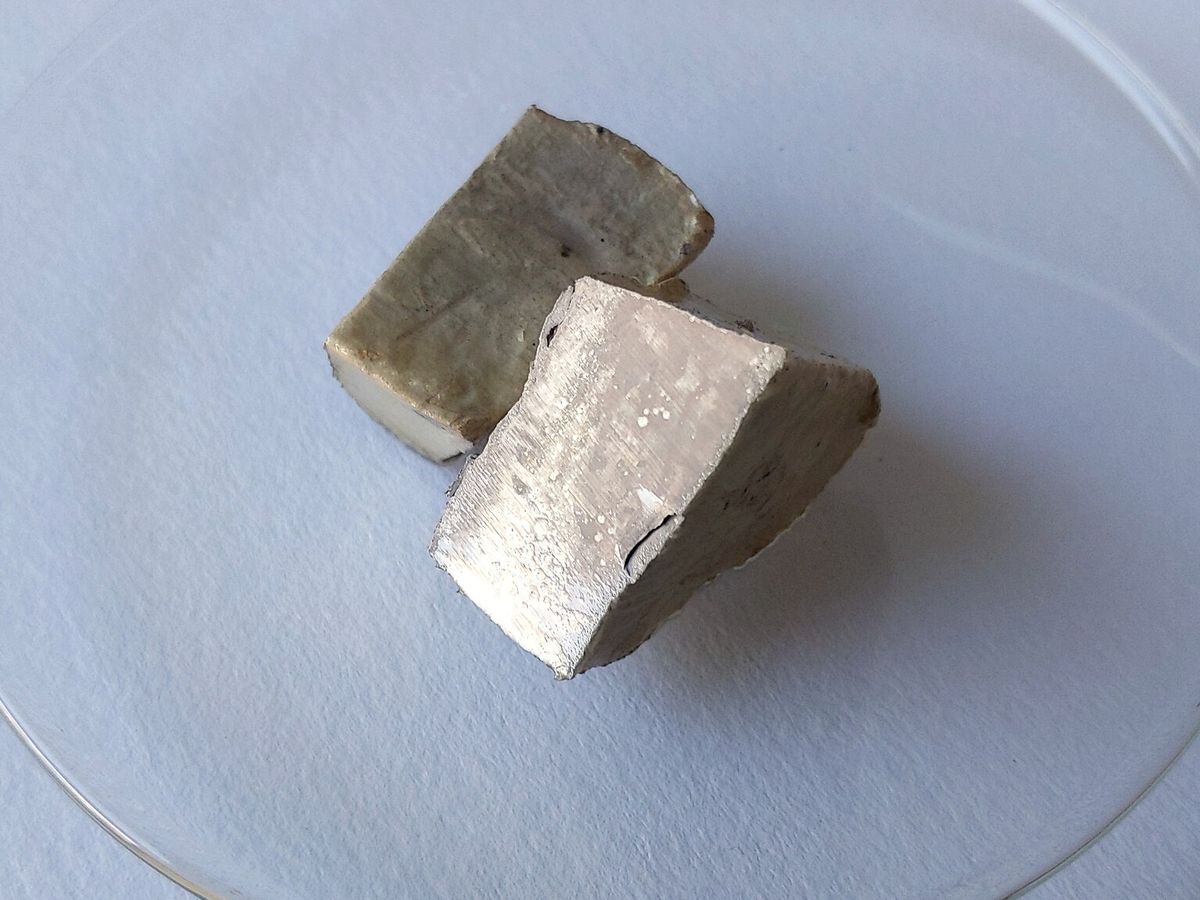
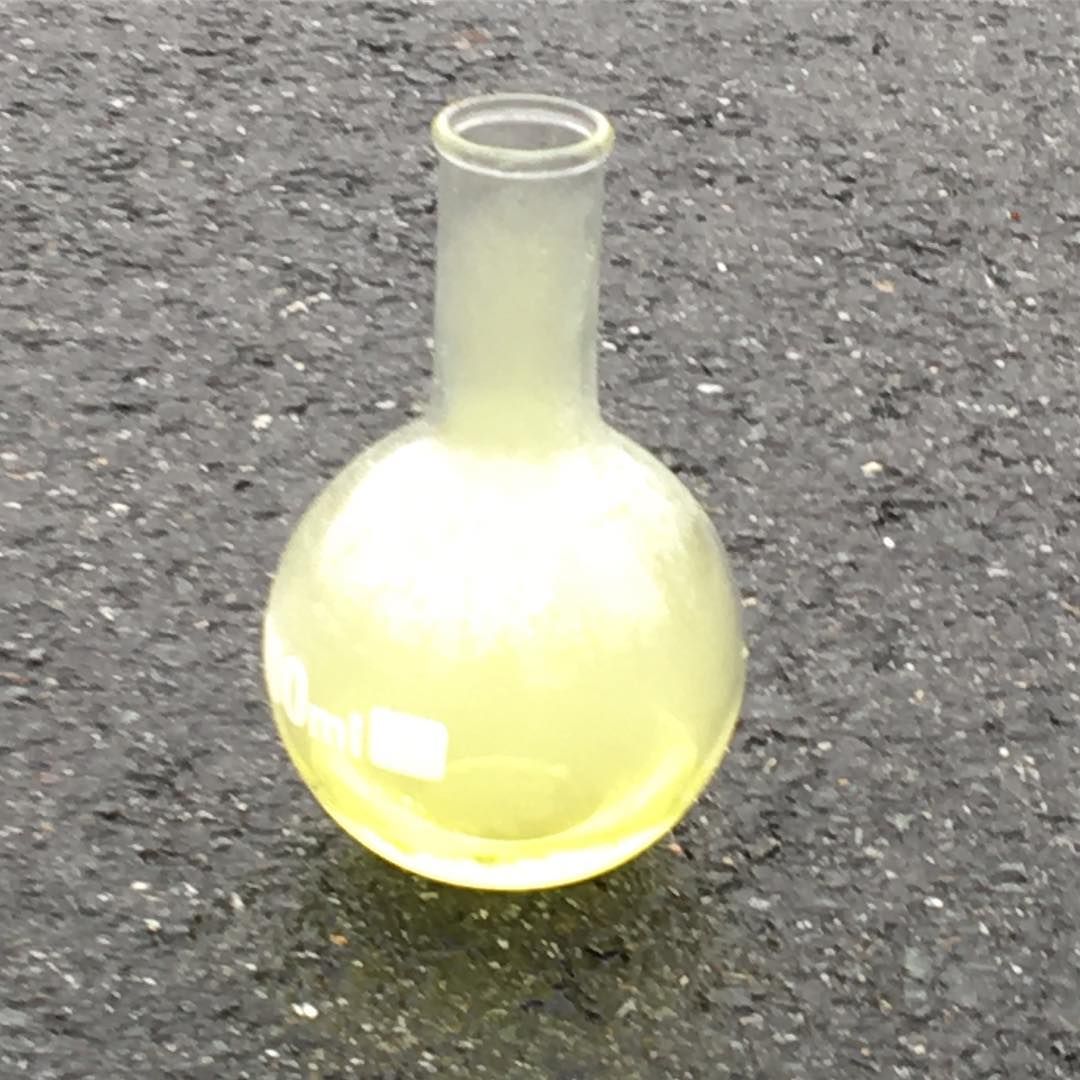
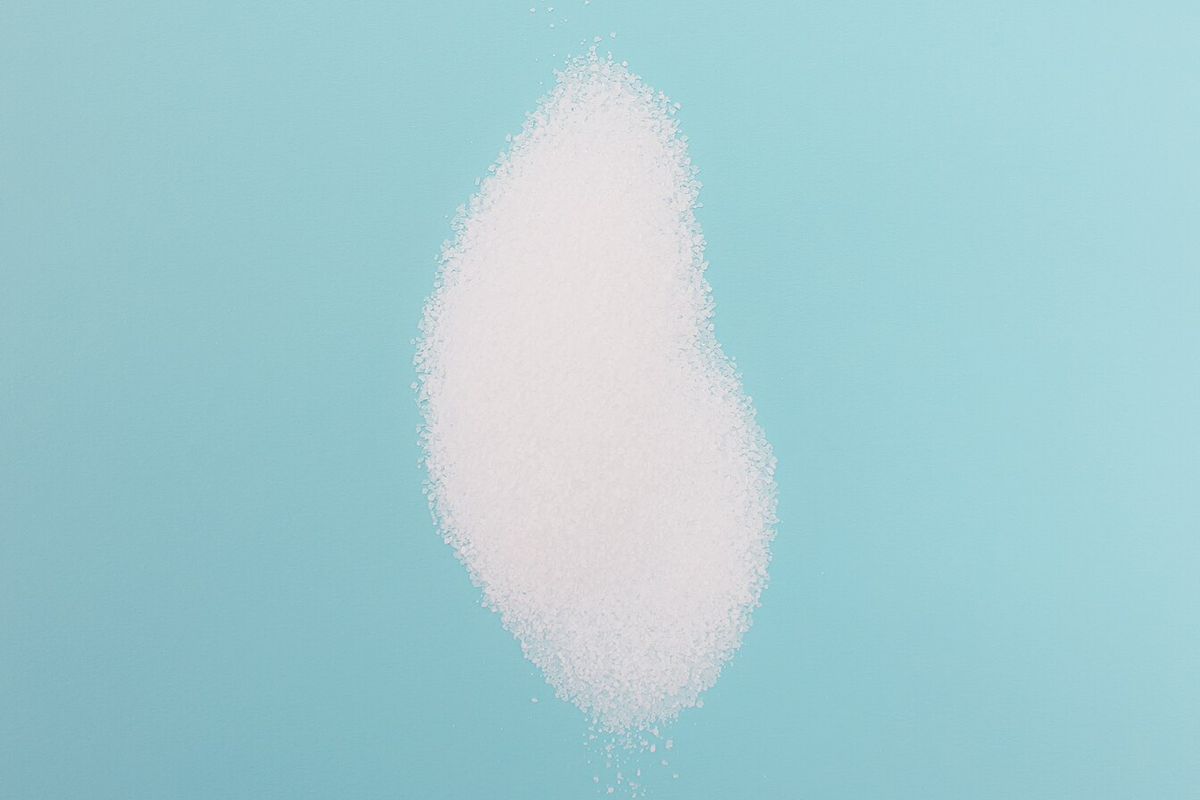
Is salt just sodium and chlorine mixed together? Or is it something new?
Photos: Nefronus, CC0 · Larenmclane, CC BY-SA 4.0 · Stock Catalog, CC BY 2.0
BEFORE YOU START
Get set up
1
Open mrsajdak.com/salt on your device.
2
Write your name, the date and your period on the worksheet.
3
Find the four tabs at the top of the lab. Each tab goes with one part of the worksheet.
4
Start on Tab 1. Do not skip ahead.

| Tab in the lab | Worksheet | Questions |
|---|---|---|
| 1. The demo | Part 1 | 1 to 5 |
| 2. One electron | Part 2 | 6 to 9 |
| 3. Other salts | Part 3 | 10 and 11 |
| 4. Test all three | Part 4 and Wrap it up | 12 to 14 |
Screenshot: mrsajdak.com/salt
TAB 1 · QUESTIONS 1 TO 5
Part 1. The demo
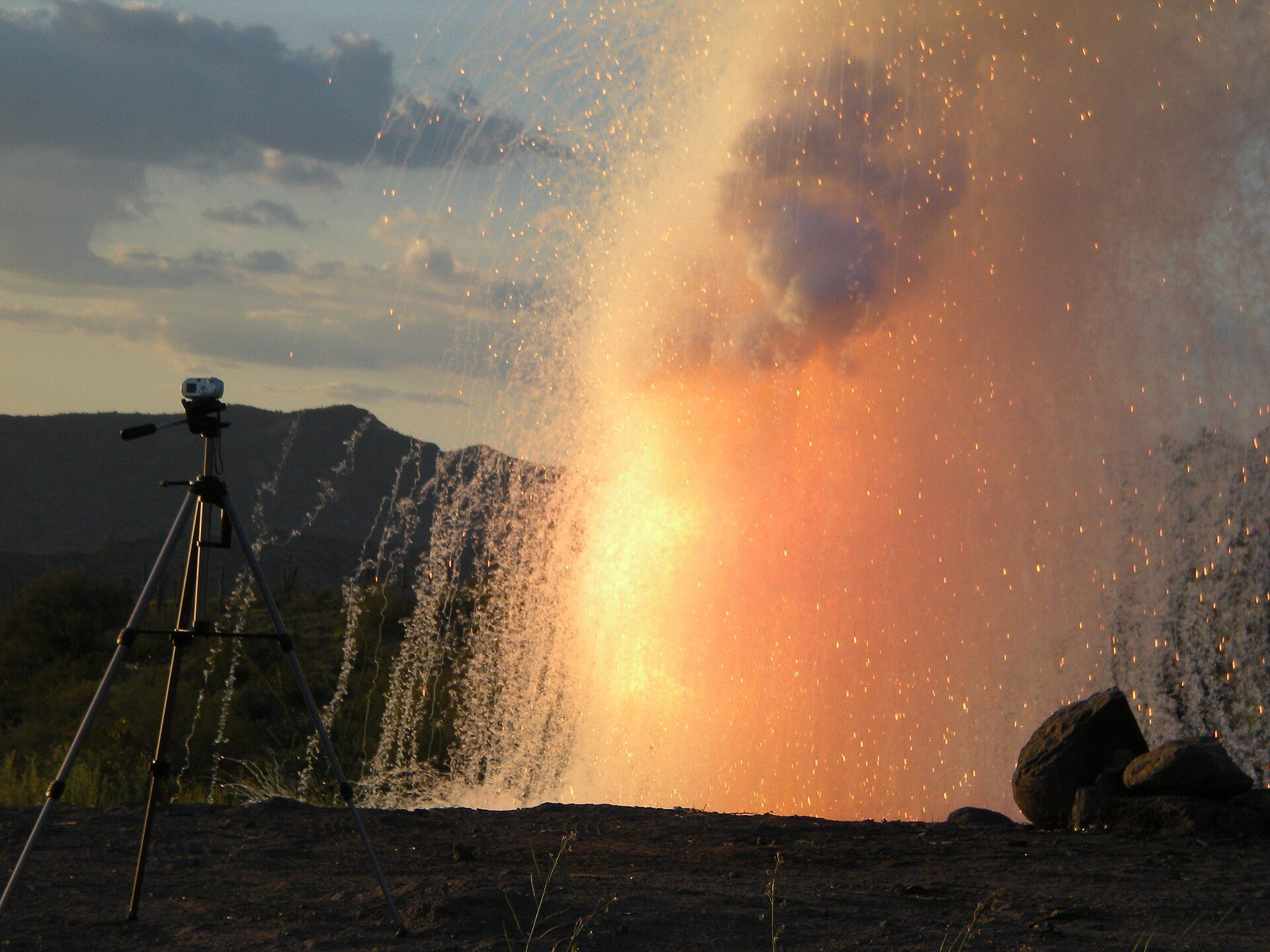
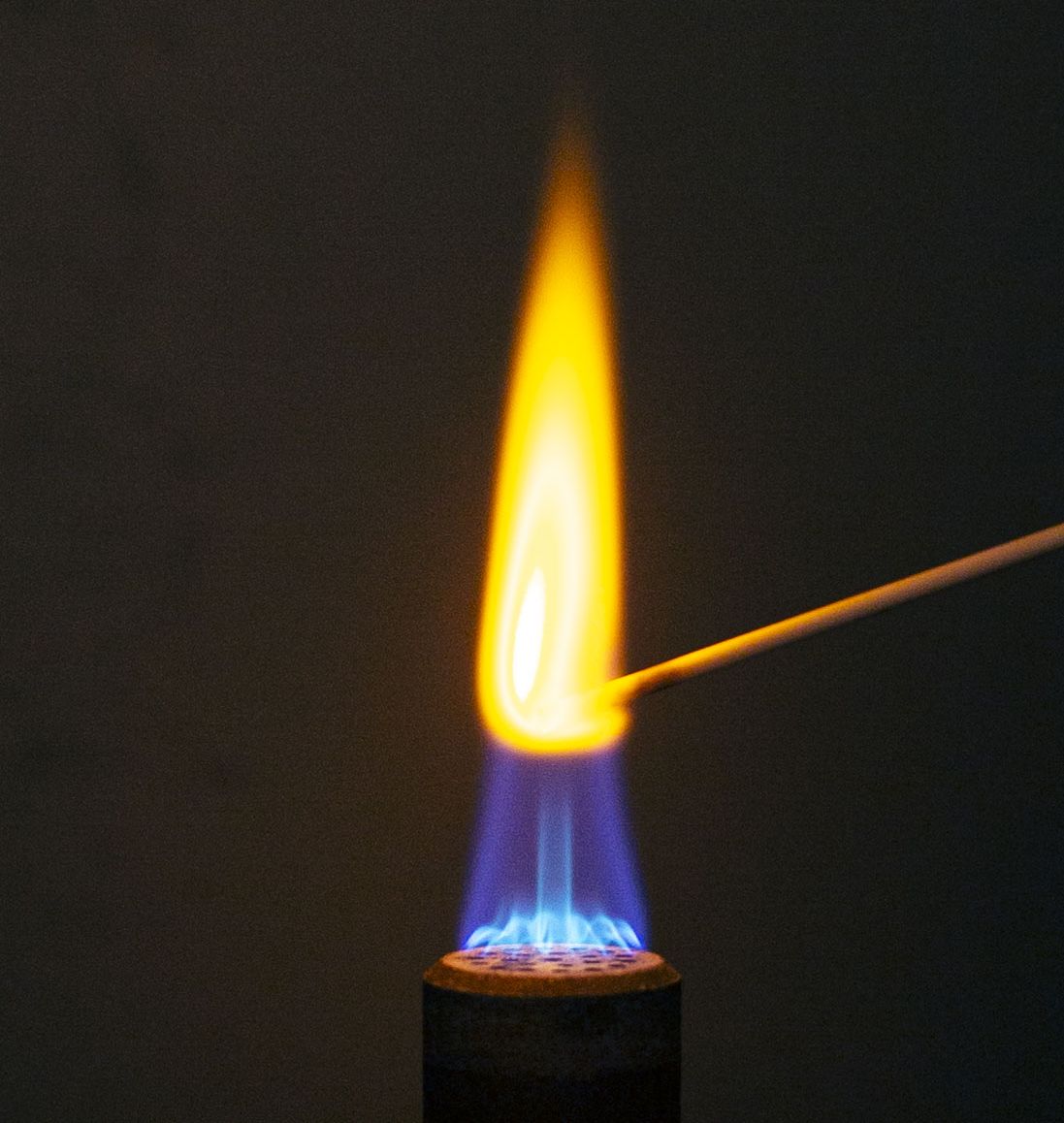
Sodium and chlorine react to make salt. The reaction gives off heat and a yellow flame.
Chlorine gas is too dangerous for a classroom. So you will run it in the lab, in a sealed flask on a balance.
Photo: Ajhalls, public domain
PART 1 · TAB 1
Run the demo
1
Drag the Sodium on the sand slider. It sets the grams of sodium.
2
Press Add a drop of water to watch. Or press Skip to the end.
3
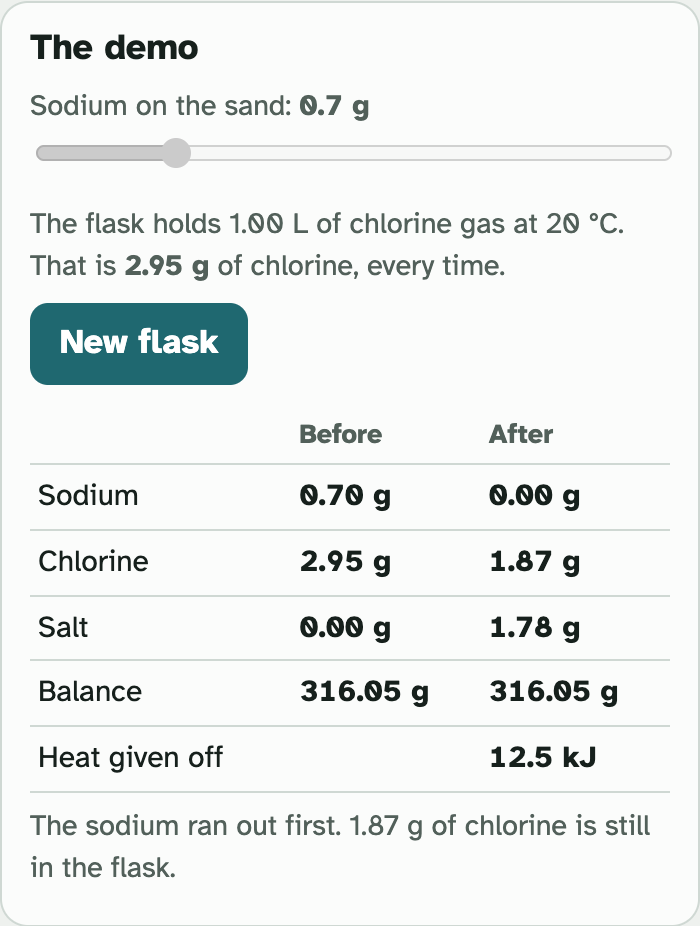
Read the Before and After columns.
4
Press New flask to go again.
5
Your runs keeps one row for each amount.
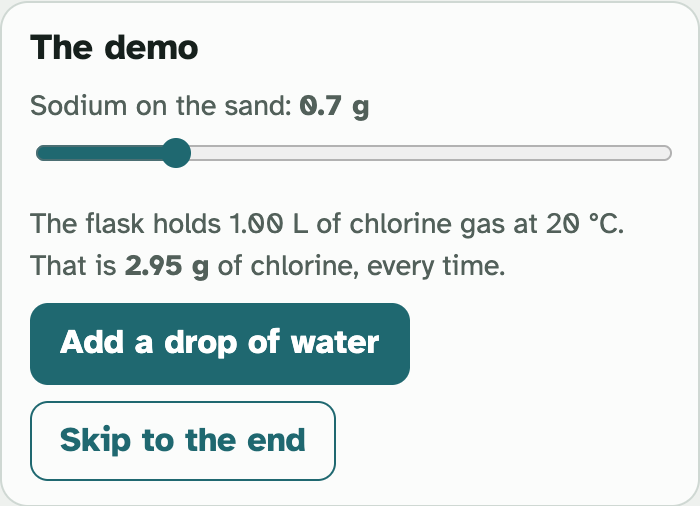
The slider goes from 0.1 g to 3.0 g.
The flask holds the same amount of chlorine every time.
Screenshots: mrsajdak.com/salt, Tab 1
PART 1 · QUESTION 1
Add up the masses
1
Set the sodium to 1.0 g. Run it.
2
Sodium used is sodium Before minus sodium After.
3
Find the chlorine used the same way.
4
Add the two. Then read the Salt row.
5
What do you notice?
Example
Chlorine before: 5.00 g.
Chlorine after: 3.20 g.
5.00 − 3.20 = 1.80
So 1.80 g of chlorine was used.
These are not your numbers. Use your own.
Screenshot: mrsajdak.com/salt, Tab 1
PART 1 · QUESTION 2
Six runs, one table
1
Run six amounts of sodium: 0.5, 1.0, 1.5, 2.0, 2.5 and 3.0 g.
2
After each run, copy Heat given off from the After column. It is not in Your runs.
3
Then press New flask.
4
At the end, copy Salt made and Left over from Your runs.
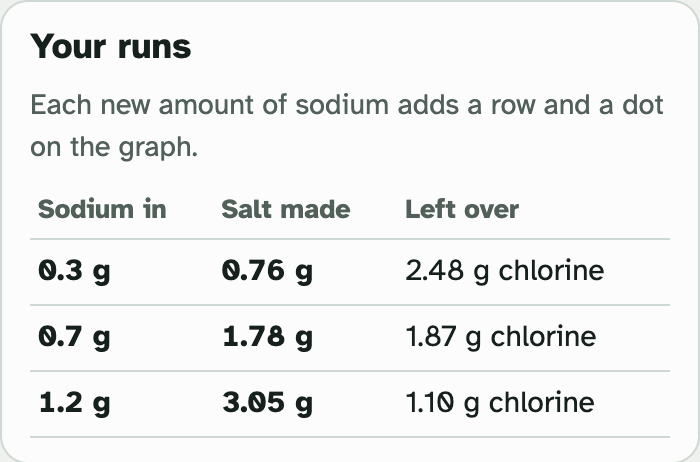
“Left over” is what is still in the flask after the flame goes out. Write what it is and how much.
These three rows are 0.3, 0.7 and 1.2 g. They are not in your table.
Screenshot: mrsajdak.com/salt, Tab 1
PART 1 · QUESTIONS 3 AND 4
When the salt stops growing
QUESTION 3
Limiting reactant
Compare 0.5 g and 1.0 g in your table. Then compare 2.0 g and 3.0 g.
The reactant that runs out first is the limiting reactant. The sentence under the After column tells you what ran out.
QUESTION 4
Find the switch
Move the slider in 0.1 g steps. Run each one.
Watch Left over. Find the two amounts where it changes from chlorine to sodium.
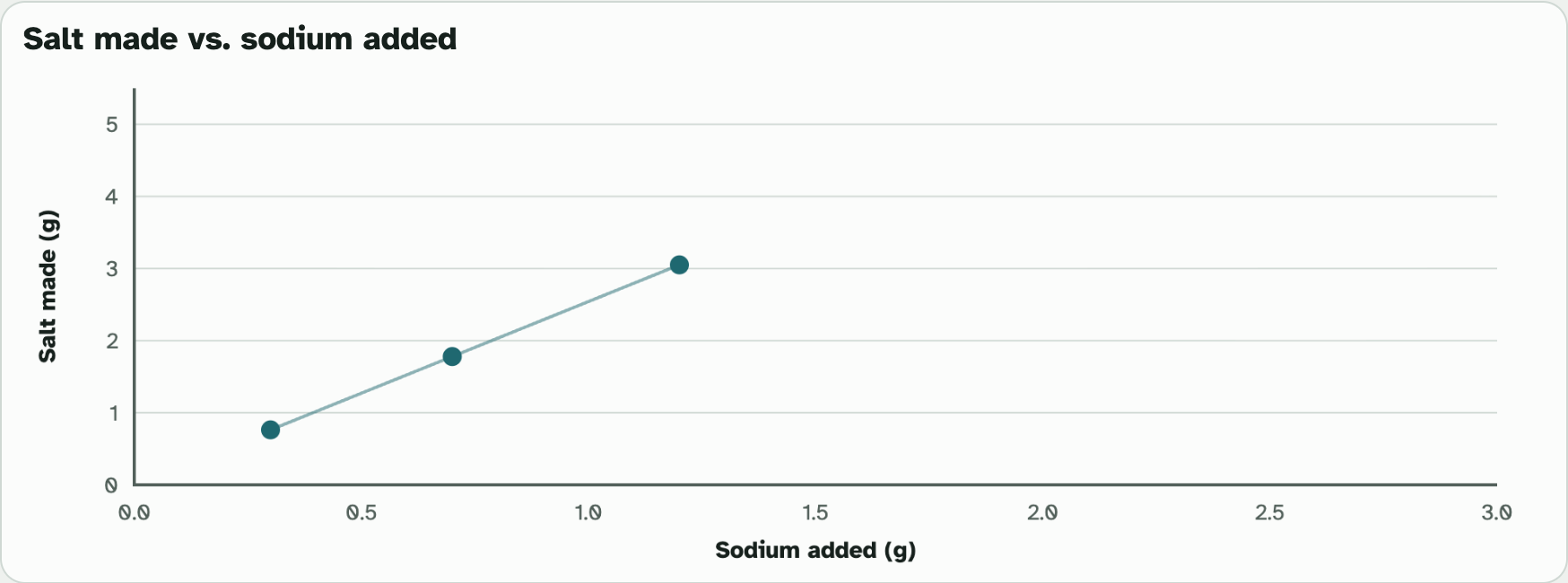
Each run adds a dot. Look at the shape of the line once all six dots are on it.
This graph has only three small runs on it.
Screenshot: mrsajdak.com/salt, Tab 1
PART 1 · QUESTION 5
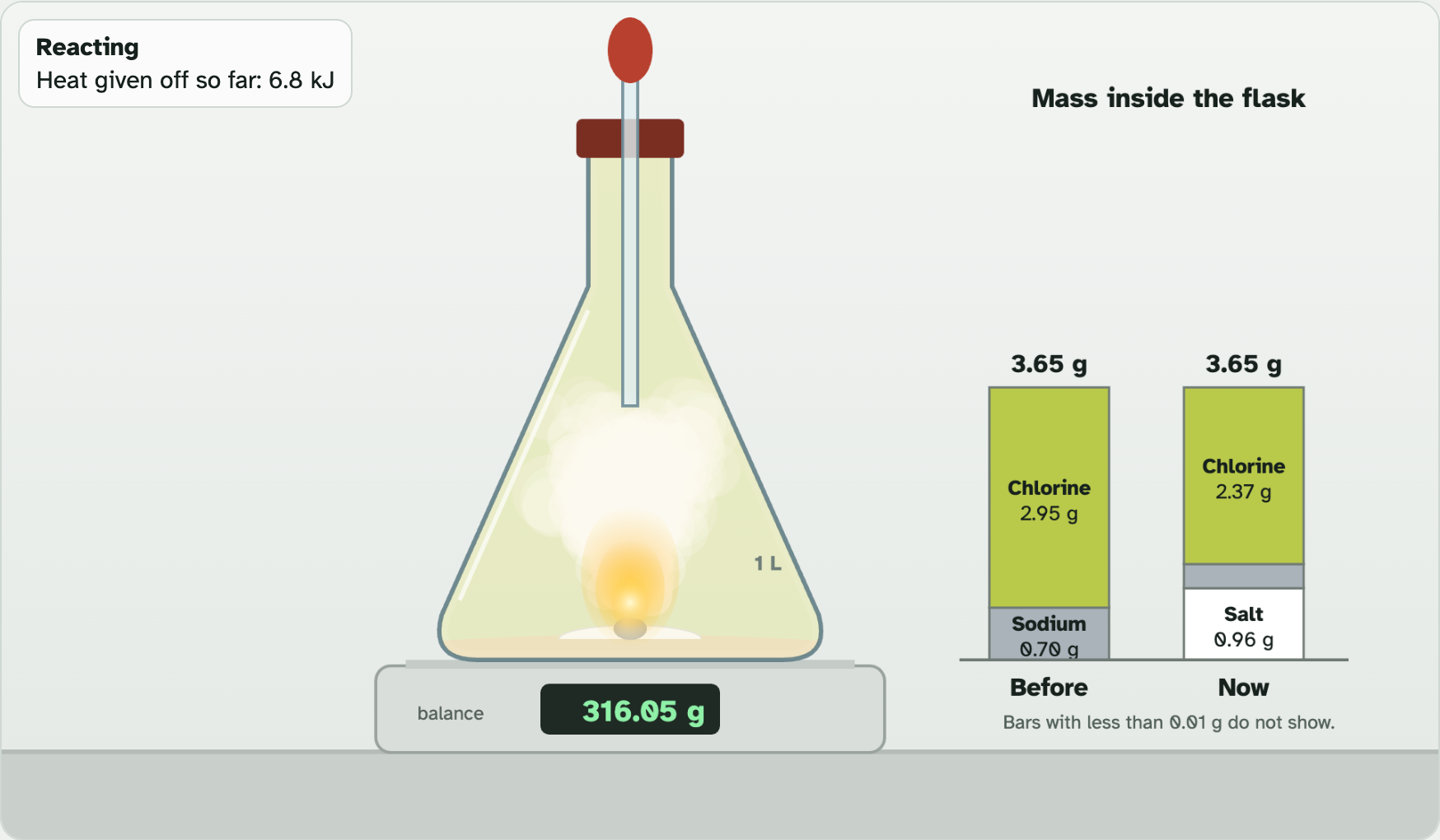
Watch the balance
Before
Run 1.0 g again. Read the Balance row in the Before column.
After
Read the Balance row in the After column.
Why?
A green gas and a silver metal turned into a white solid. The flask is sealed. What does that tell you about the atoms inside?
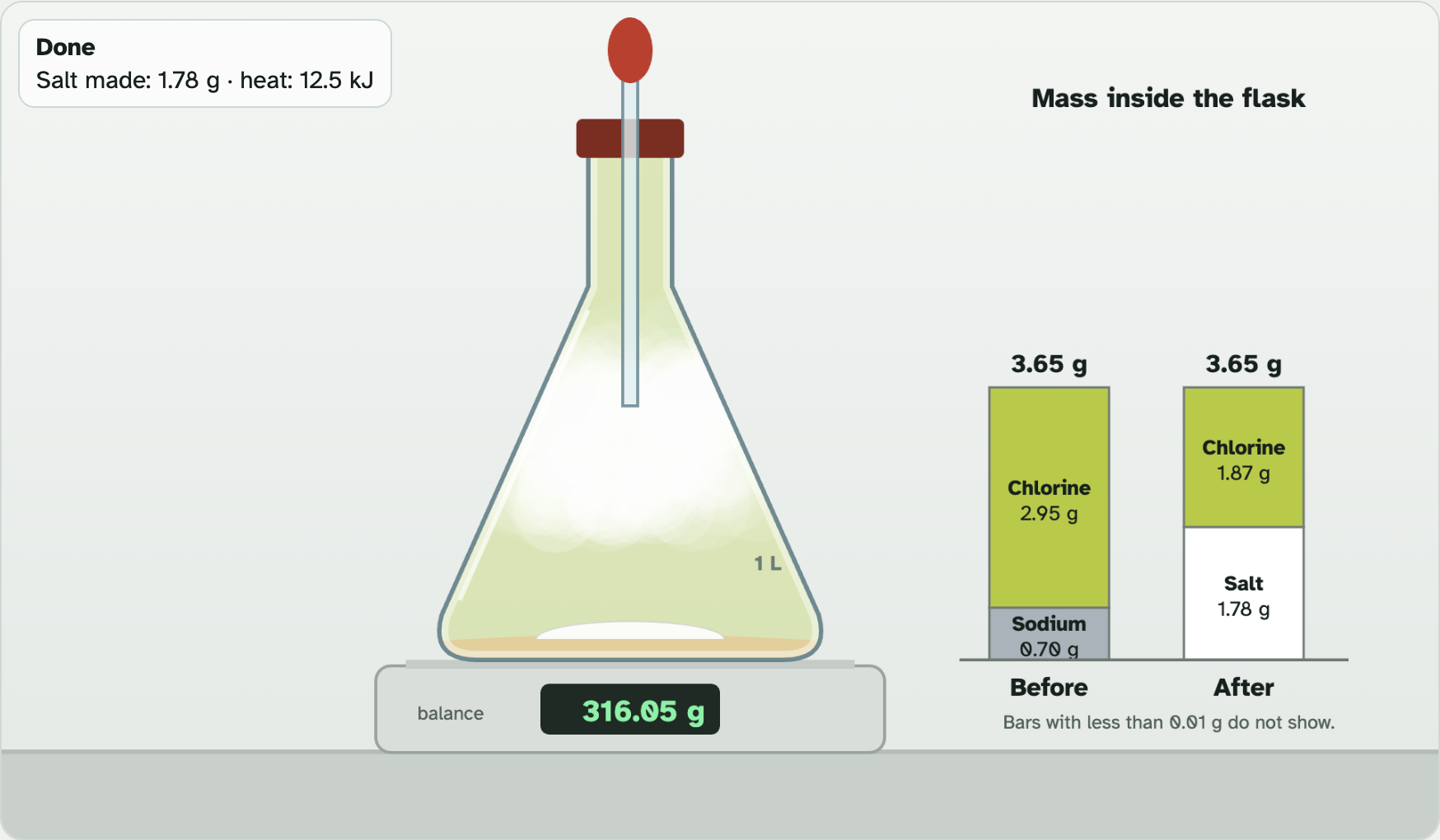
The green number under the flask is the balance. The bars show the mass inside the flask.
Screenshot: mrsajdak.com/salt, Tab 1
TAB 2 · QUESTIONS 6 TO 9
Part 2. One electron
Zoom in on one sodium atom and one chlorine atom inside that flame.
One electron moves. That makes two ions: atoms with a charge.
Photo: S k y r, CC BY 4.0
PART 2 · TAB 2
Move one electron
1
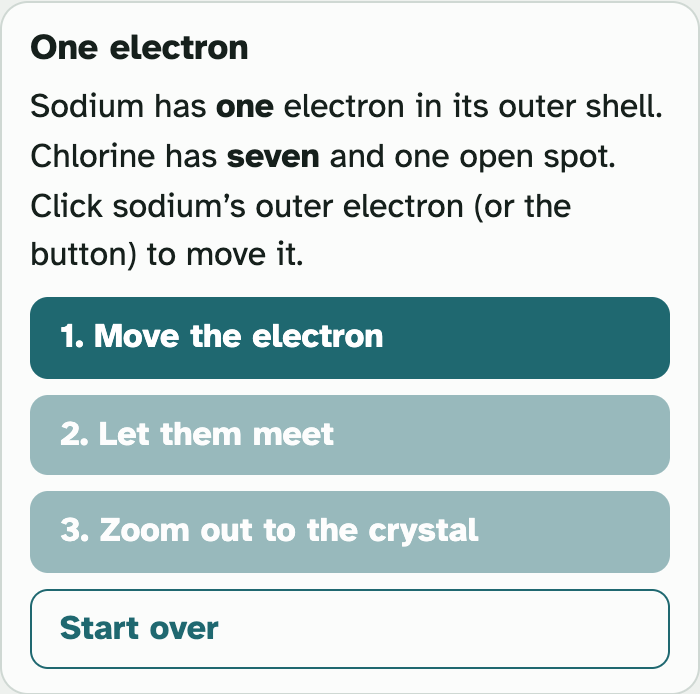
Click sodium’s gold electron. Or press 1. Move the electron.
2
Watch both atoms change size.
3
Press 2. Let them meet.
4
Press 3. Zoom out to the crystal.
5
Start over puts the electron back.
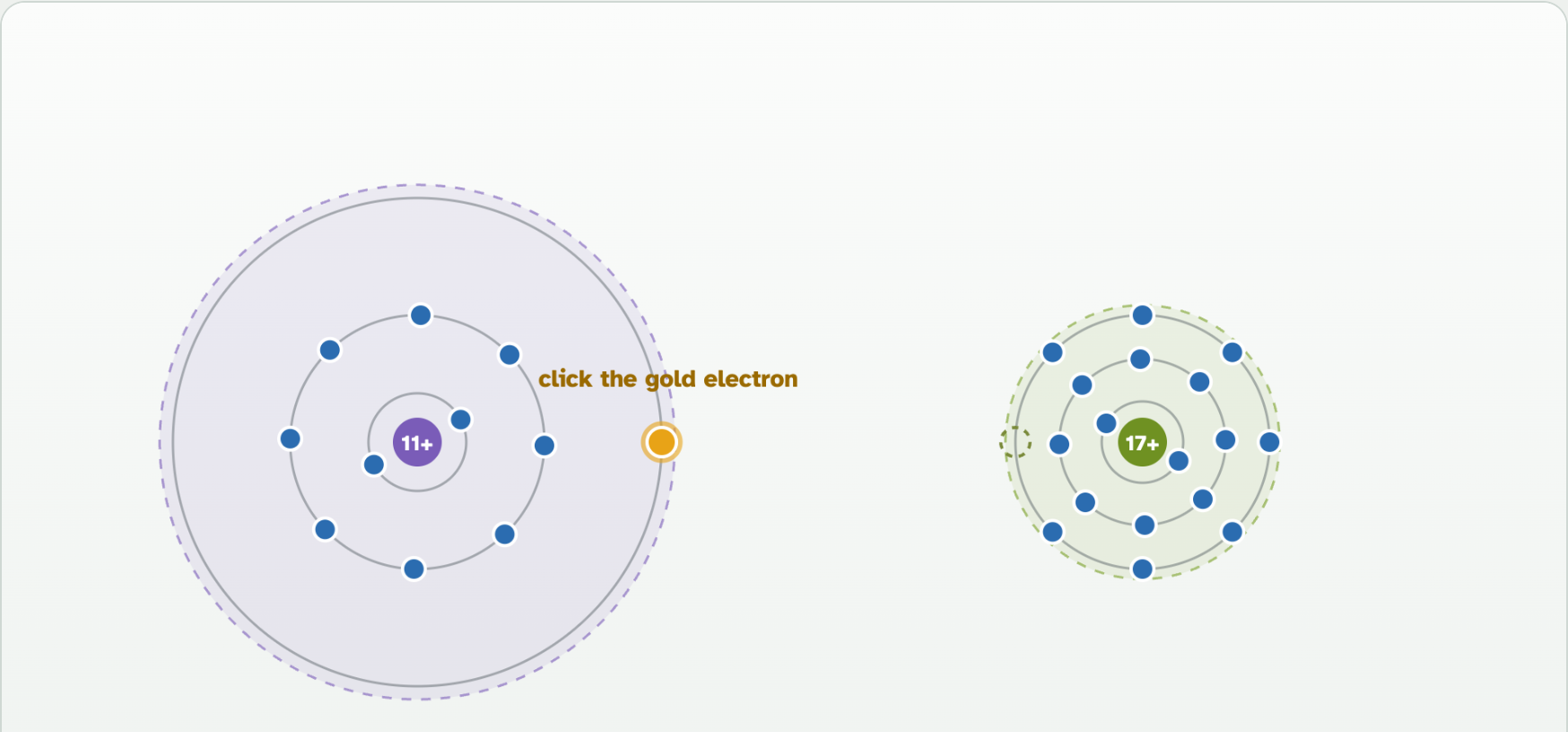
Blue dots are electrons. The gold one is the one that moves.
The number in the middle of each atom is its protons.
Screenshots: mrsajdak.com/salt, Tab 2
PART 2 · QUESTION 6
Four particles, one table
| Column | Where to look |
|---|---|
| Electrons by shell | The Atoms and ions box |
| Protons | Under each atom in the picture |
| Electrons | Under each atom in the picture |
| Charge | The Atoms and ions box |
| Radius (pm) | The Atoms and ions box |
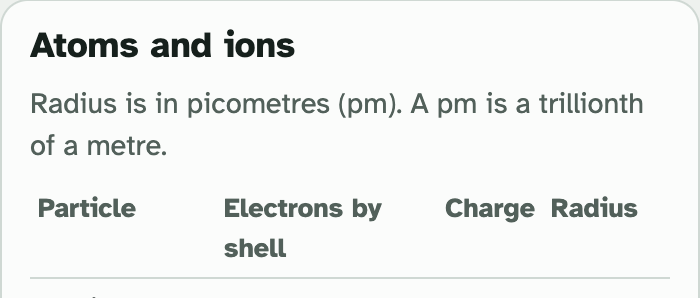
Fill in the two atom rows first.
Then move the electron. The two ion rows show up.
A pm is a picometre. That is a trillionth of a metre.
Screenshot: mrsajdak.com/salt, Tab 2
PART 2 · QUESTIONS 7 AND 8
Why only one electron?
QUESTION 7
Same as
Match the noble gas
Move the electron. Read the last line under each ion in the picture.
It names a noble gas with the same electrons.
QUESTION 7
Smaller
Why did Na⁺ shrink?
Compare Electrons by shell for Na and Na⁺ in your table.
What happened to the outer shell?
QUESTION 8
2nd
Try for a second one
Press Try to pull a second electron off Na⁺.
Write both energies. Divide the second by the first.
PART 2 · QUESTION 9
Where the heat comes from
1
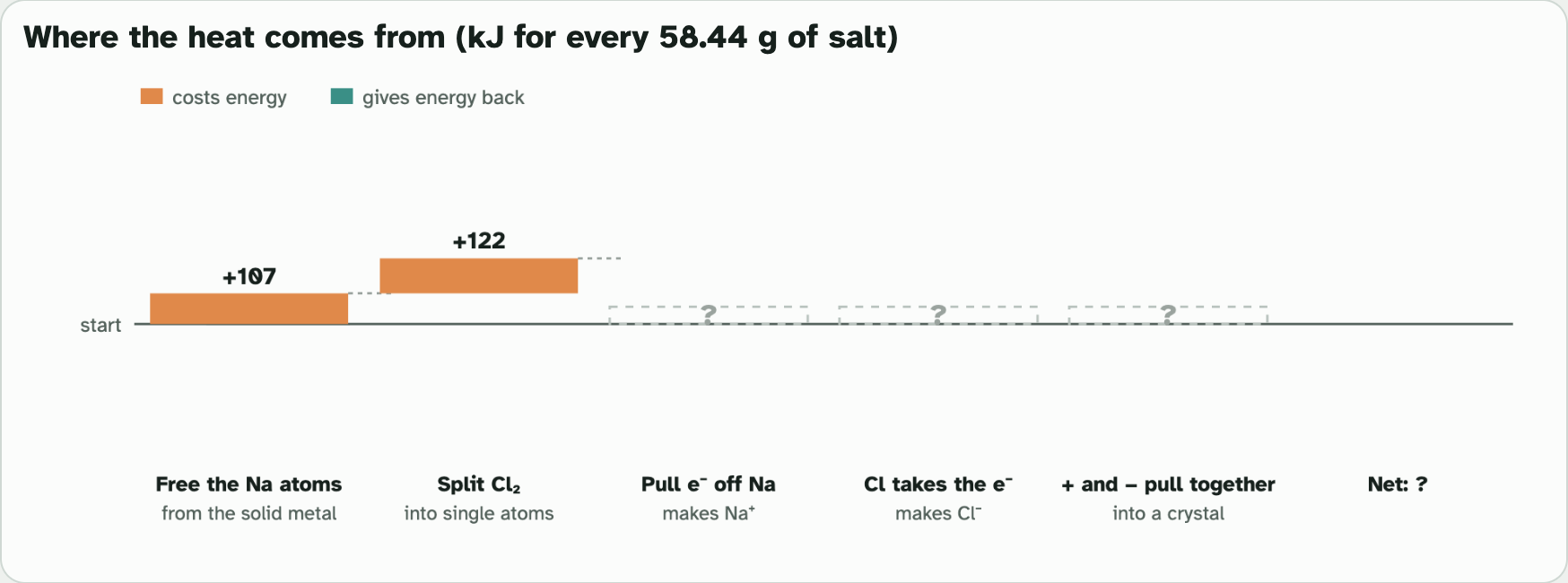
Press 2. Let them meet. Now every bar shows.
2
Orange bars cost energy. Find the biggest one.
3
Blue-green bars give energy back. Find the biggest one.
4
Read the Net bar. It is for 58.44 g of salt.
5
Check it against Tab 1. Show your math.
Example
40 ÷ 10 = 4
4 × 50 = 200
If 10 g gives off 50 kJ, then 40 g gives off 200 kJ. These are not your numbers.
Screenshot: mrsajdak.com/salt, Tab 2
TAB 3 · QUESTIONS 10 AND 11
Part 3. Other salts
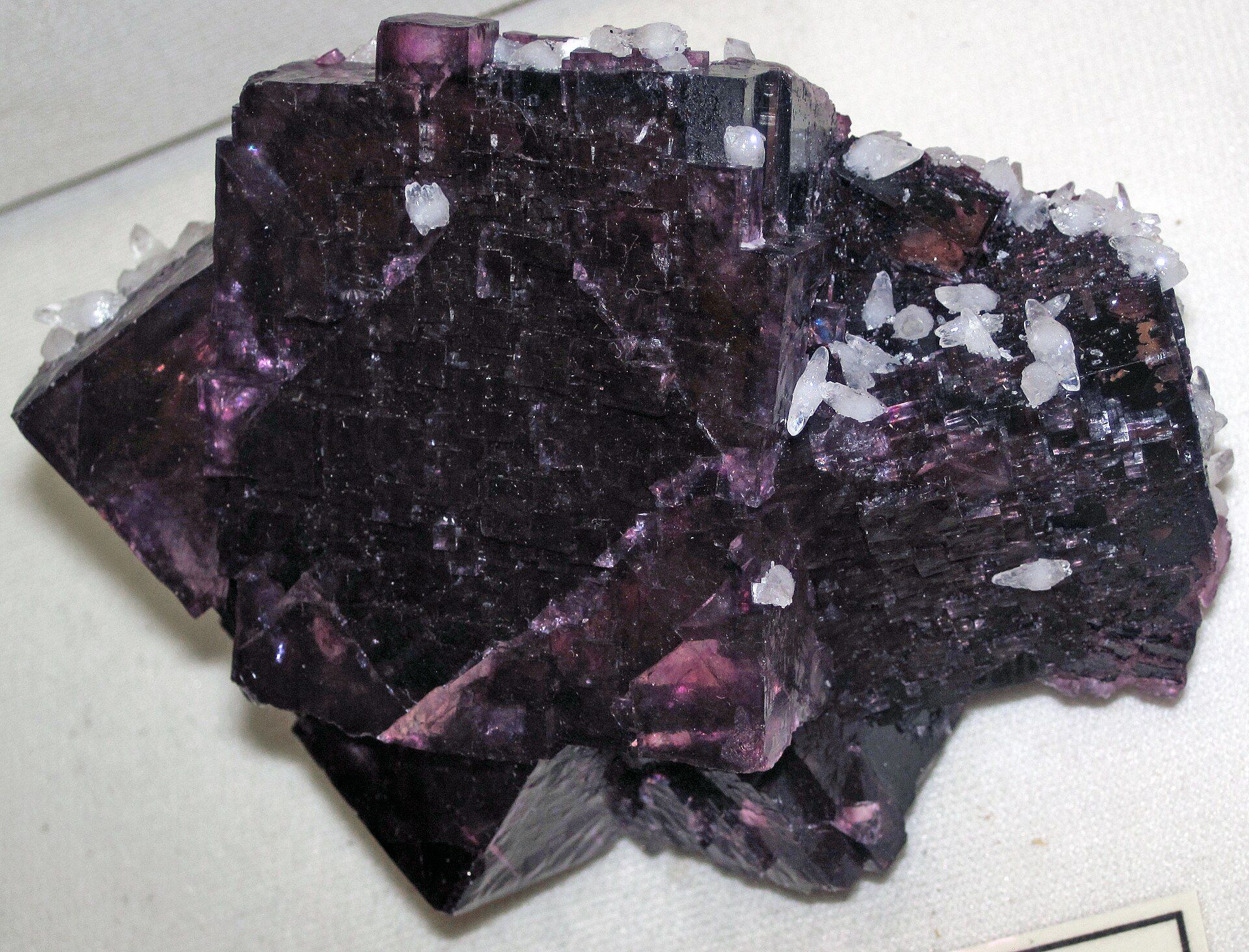
Table salt is one salt. There are many more.
Each one is made the same way. A metal gives away electrons. A nonmetal takes them.
Photo: James St. John, CC BY 2.0
PART 3 · TAB 3
Build a salt
1
Pick a Metal and a Nonmetal.
2
Click a purple electron. Then click a nonmetal atom with an open spot.
3
Stuck? Read the red message. Press + to add an atom.
4
Keep going until every metal atom is empty and every nonmetal has 8.
5
The formula shows up when you are done.
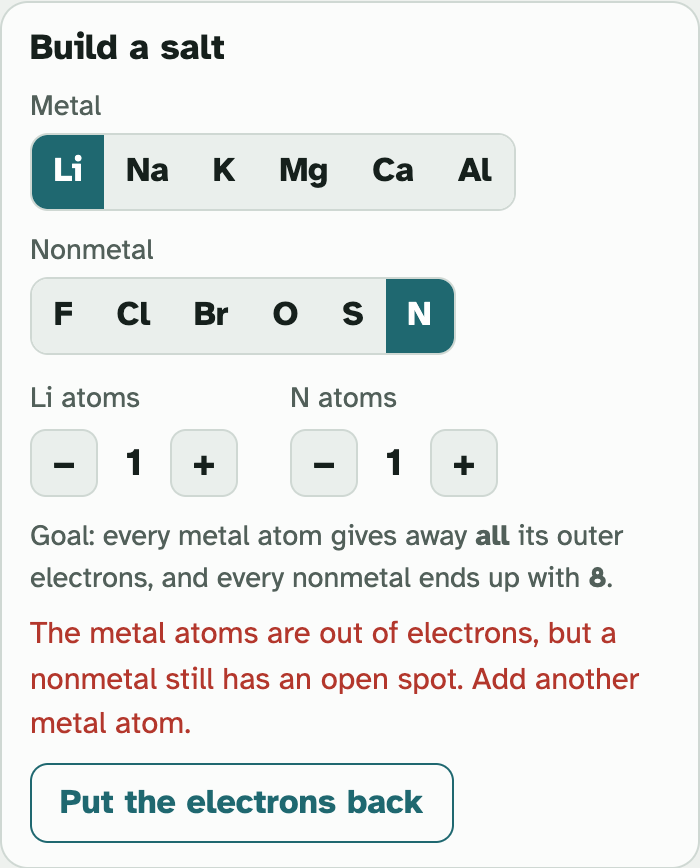
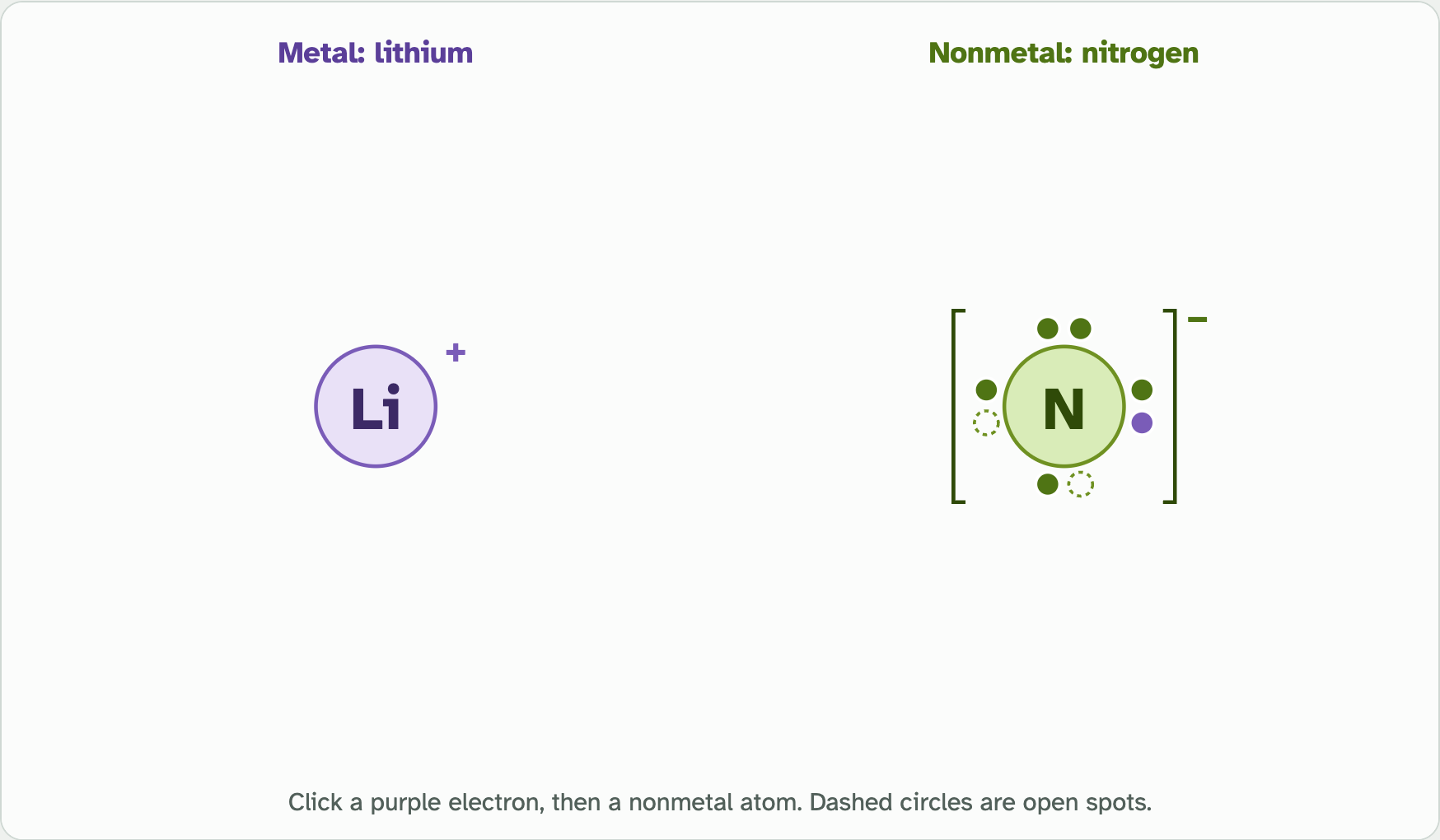
Dashed circles are open spots.
Adding an atom puts all the electrons back. You can use up to 3 atoms of each.
Put the electrons back lets you try again.
Screenshots: mrsajdak.com/salt, Tab 3
PART 3 · QUESTIONS 10 AND 11
Six salts, then a pattern
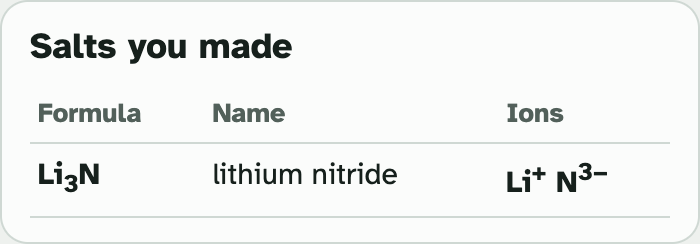
| Column | Where to look |
|---|---|
| Outer electrons | The Outer electrons box |
| Atoms needed | The two counters, once the salt is done |
| Formula | The box that shows up when you finish |
| Ion charges | Salts you made, in the Ions column |
A formula uses the smallest whole numbers. The lab tells you if you used more atoms than you need.
QUESTION 11
Find the pattern
Compare each metal’s outer electrons with its charge. Do the same for the nonmetals.
Then predict calcium + chlorine. Do not use the lab.
Screenshot: mrsajdak.com/salt, Tab 3
TAB 4 · QUESTIONS 12 AND 13
Part 4. Test all three
Sodium, chlorine and salt share the same atoms.
Do they act the same? Run five tests on each one and find out.
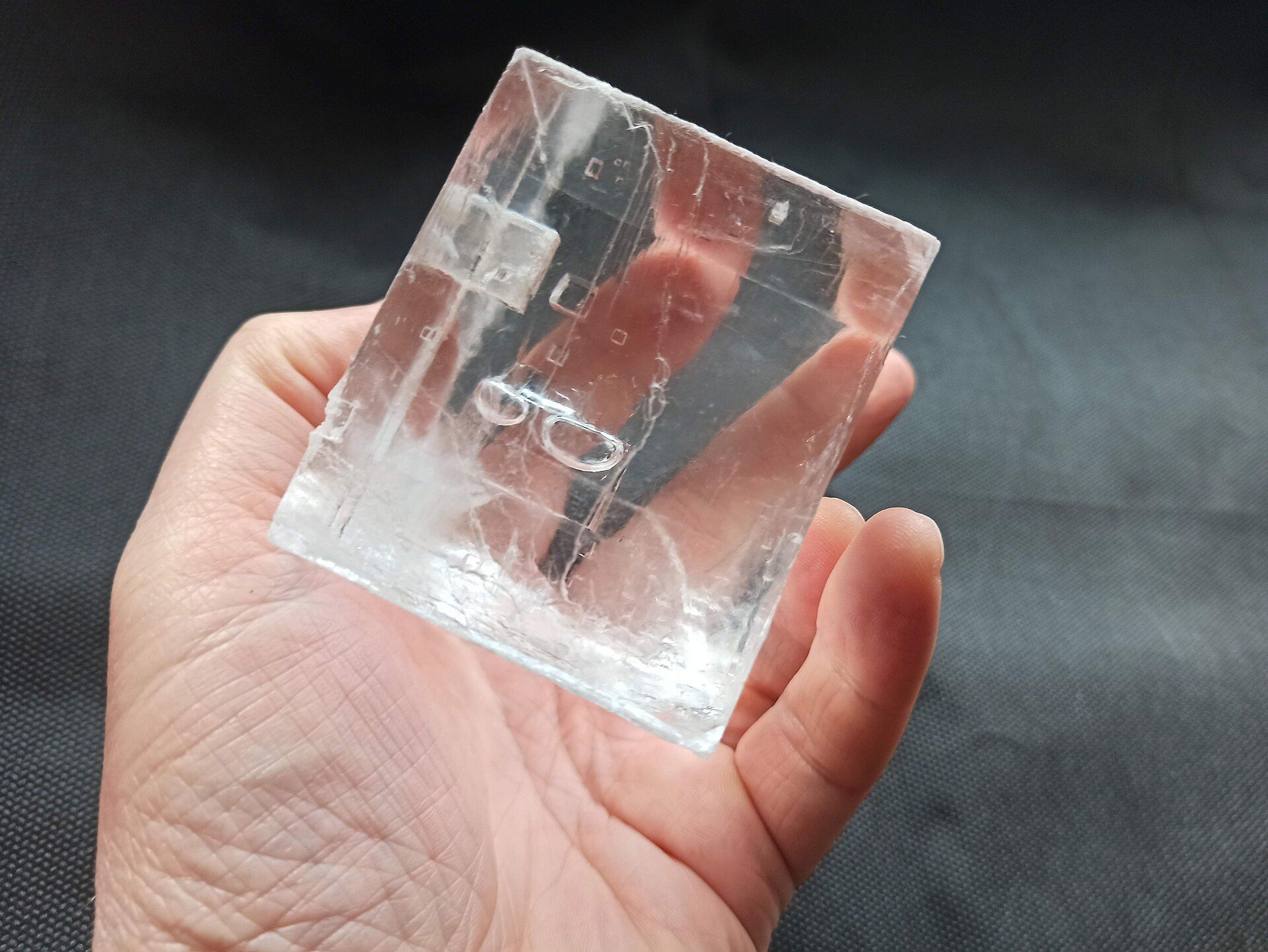
Photo: IvanSakhno, CC BY 4.0
PART 4 · QUESTION 12
Run every test
1
Pick a Substance: Sodium, Chlorine or Table salt.
2
Press a test. Wait for it to finish.
3
Read the sentence under the buttons.
4
Do all five tests. Then pick the next substance.
5
Check Your results. It should say 15 of 15 tests done.
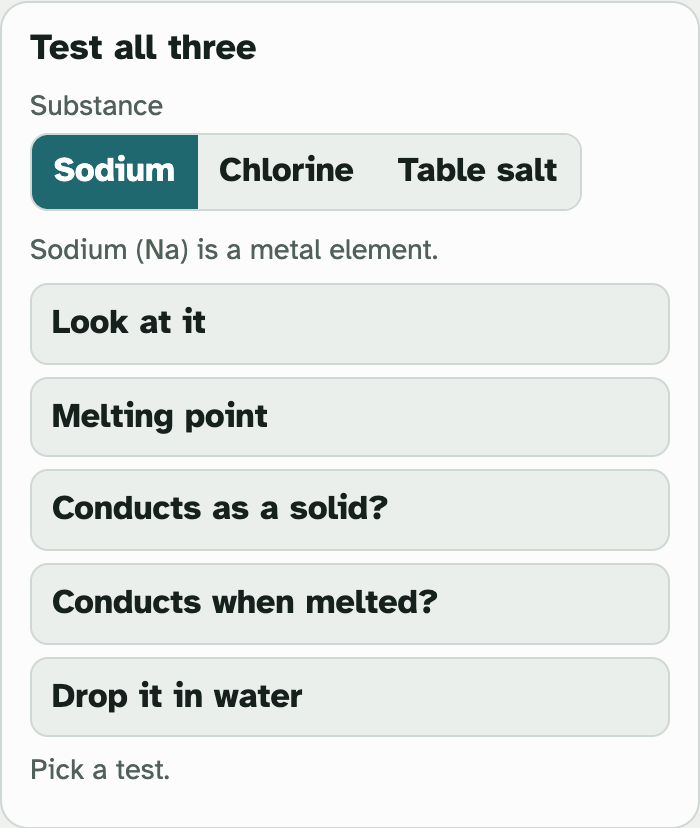
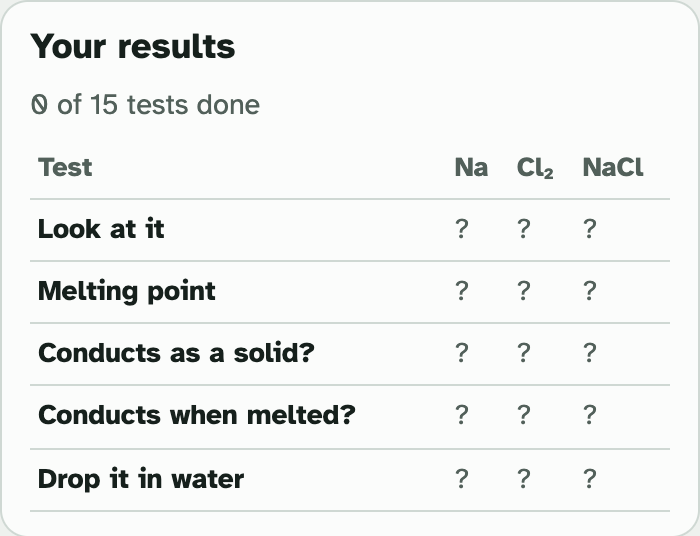
A ? means you have not run that test yet.
The sentence tells you more than the grid does.
Screenshots: mrsajdak.com/salt, Tab 4
PART 4 · QUESTION 13
Why does melted salt light the bulb?
Look back
Go to Tab 2. Press the buttons until you see the crystal.
Solid
Look at the ions in the crystal. Can they move around?
Melted
What changes for the ions when the crystal melts?
Electricity needs charges that can move. Use the word ions in your answer.
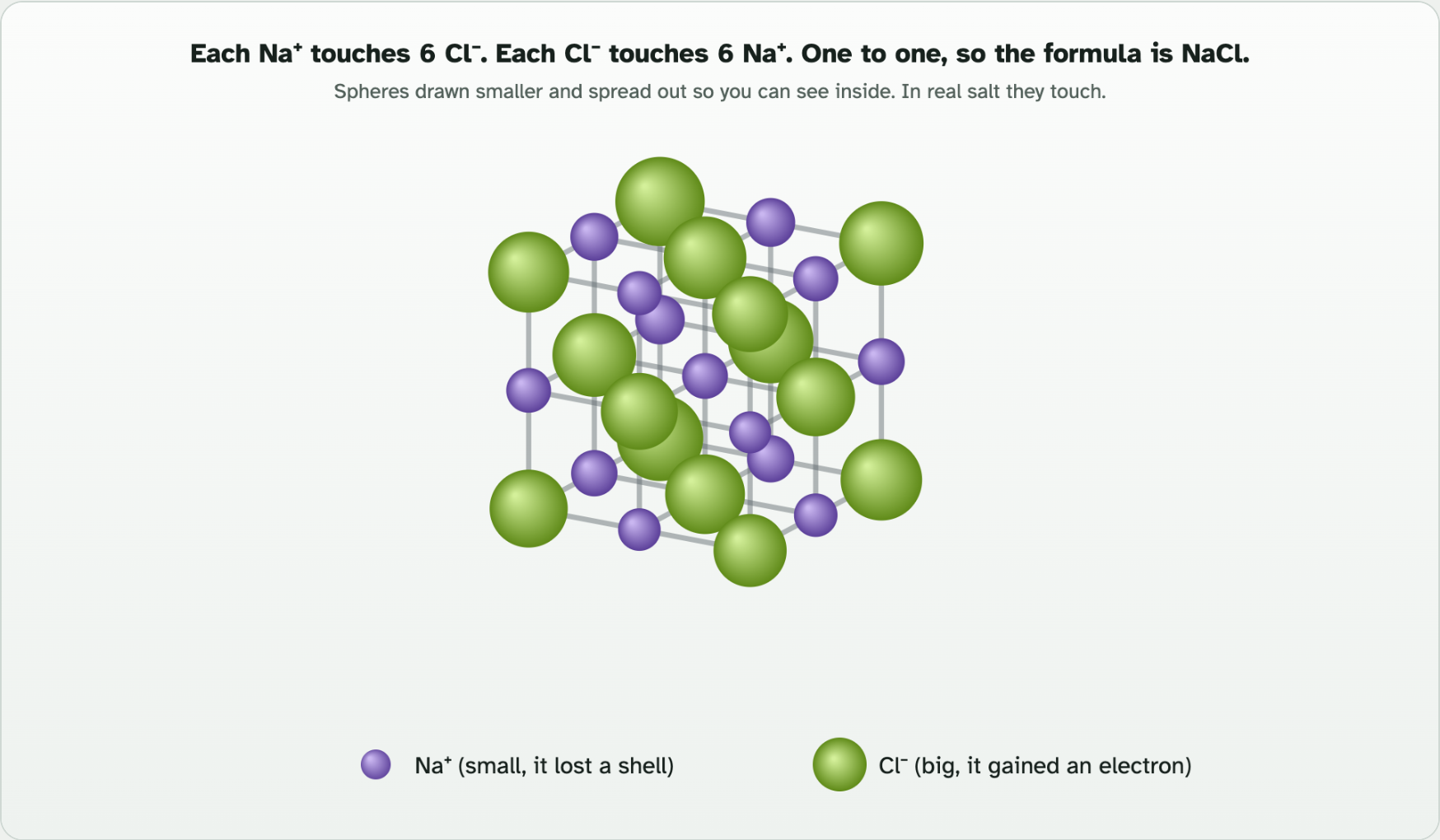
The crystal from Tab 2. Purple is Na⁺. Green is Cl⁻.
Screenshot: mrsajdak.com/salt, Tab 2
WRAP IT UP · QUESTION 14
Is salt a new substance?
The claim
“Salt is a new substance. It is not just sodium and chlorine mixed together.”
Evidence 1
Pick a number or a result from one tab. Your Question 12 table is a good place to look.
Evidence 2
Pick one from a different tab. Try your Question 2 or Question 6 table.
Reasoning
Say what happened to the atoms and their electrons.
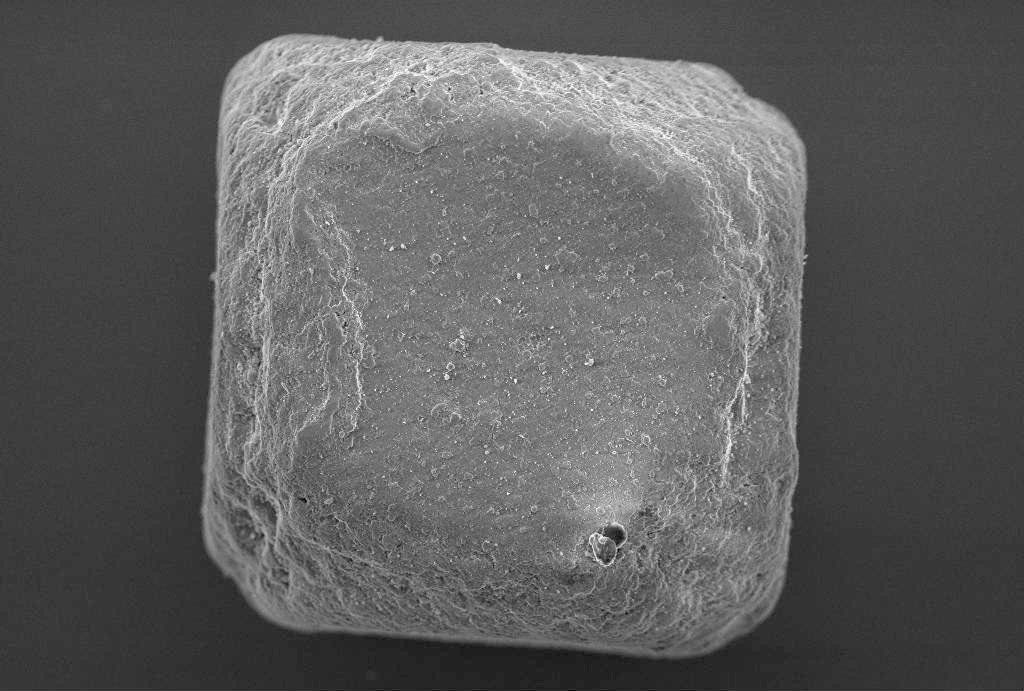
One grain of table salt under an electron microscope. It is a tiny cube.
Photo: Chhe, public domain
LAST CHECK
Before you hand it in
Name, date and period are on top.
All four tables are full.
Question 9 shows your math.
Question 14 has evidence from two tabs.
Photo: Matthias Süßen, CC BY 3.0