ANATOMY AND PHYSIOLOGY · CHAPTER 6
Skin Lab: The Organ You Wear
Follow along with your worksheet, one question at a time.
mrsajdak.com/skin
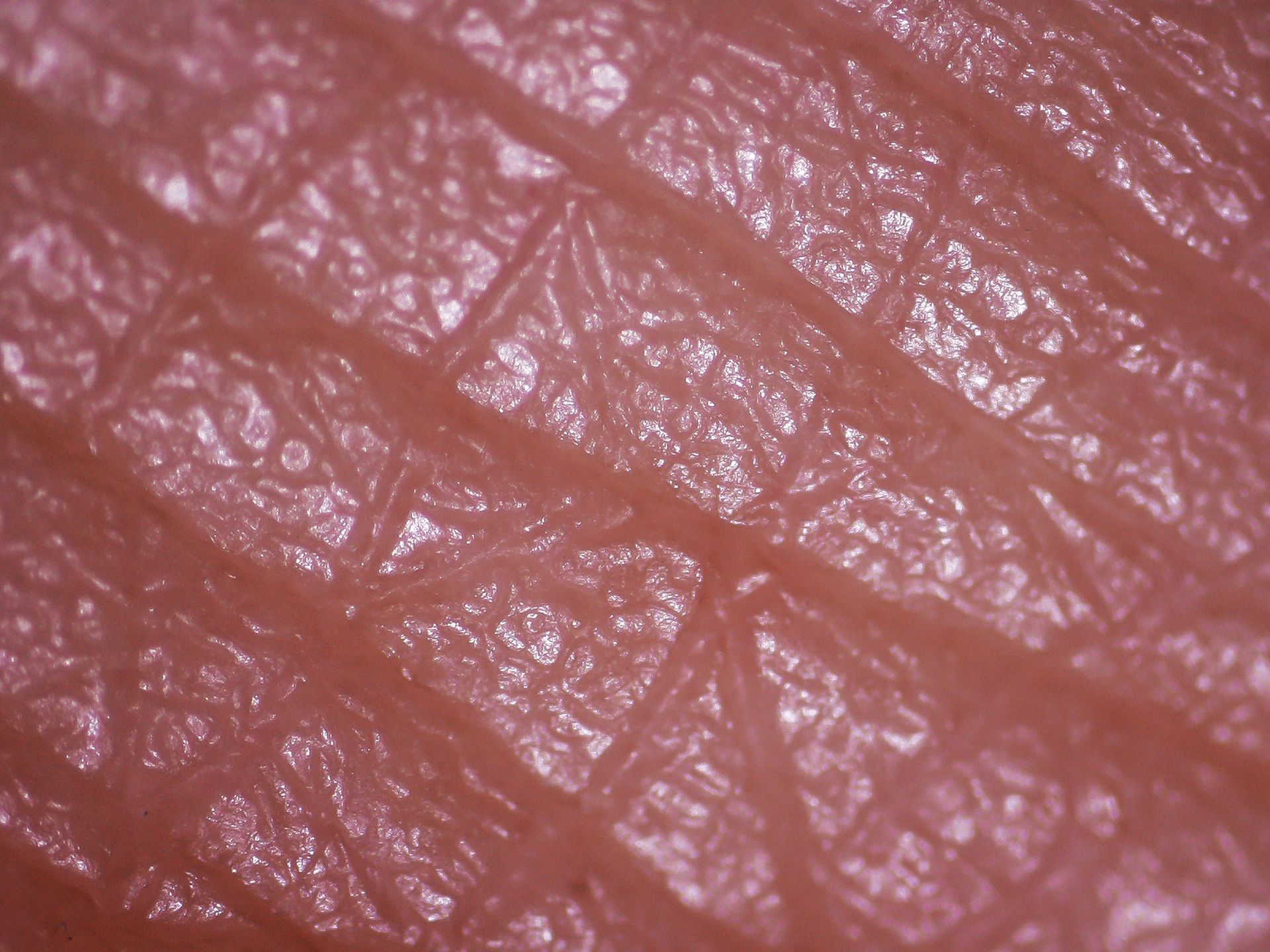
Photo: Dr. Polona Zalar, CC0
BEFORE YOU START
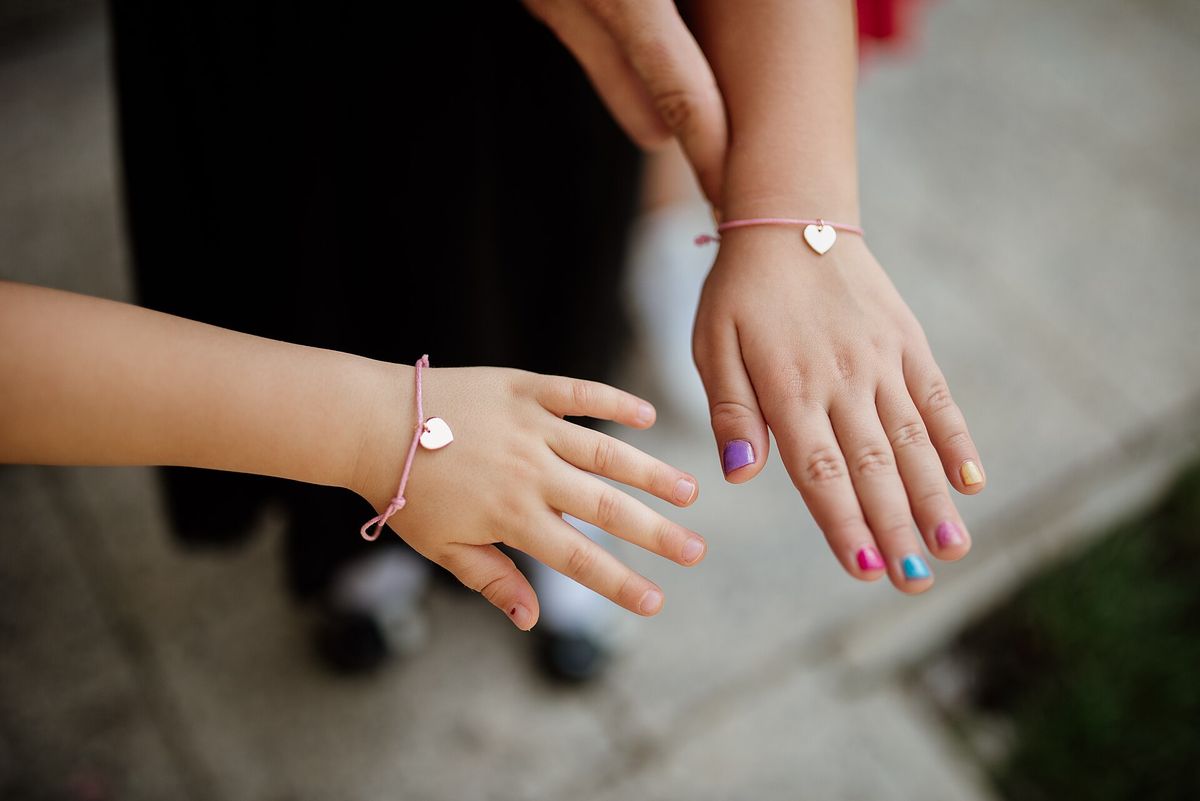
More than just skin
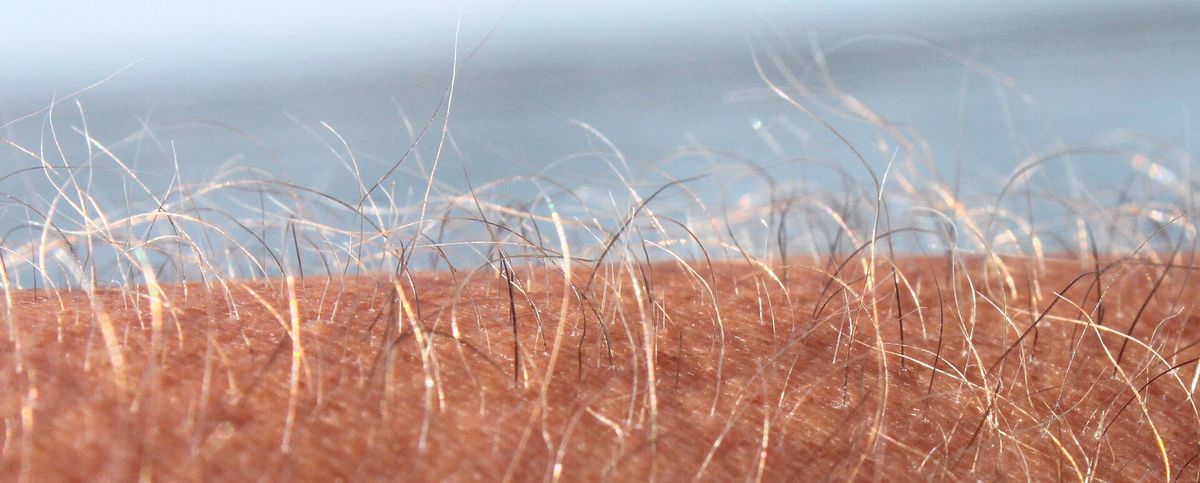
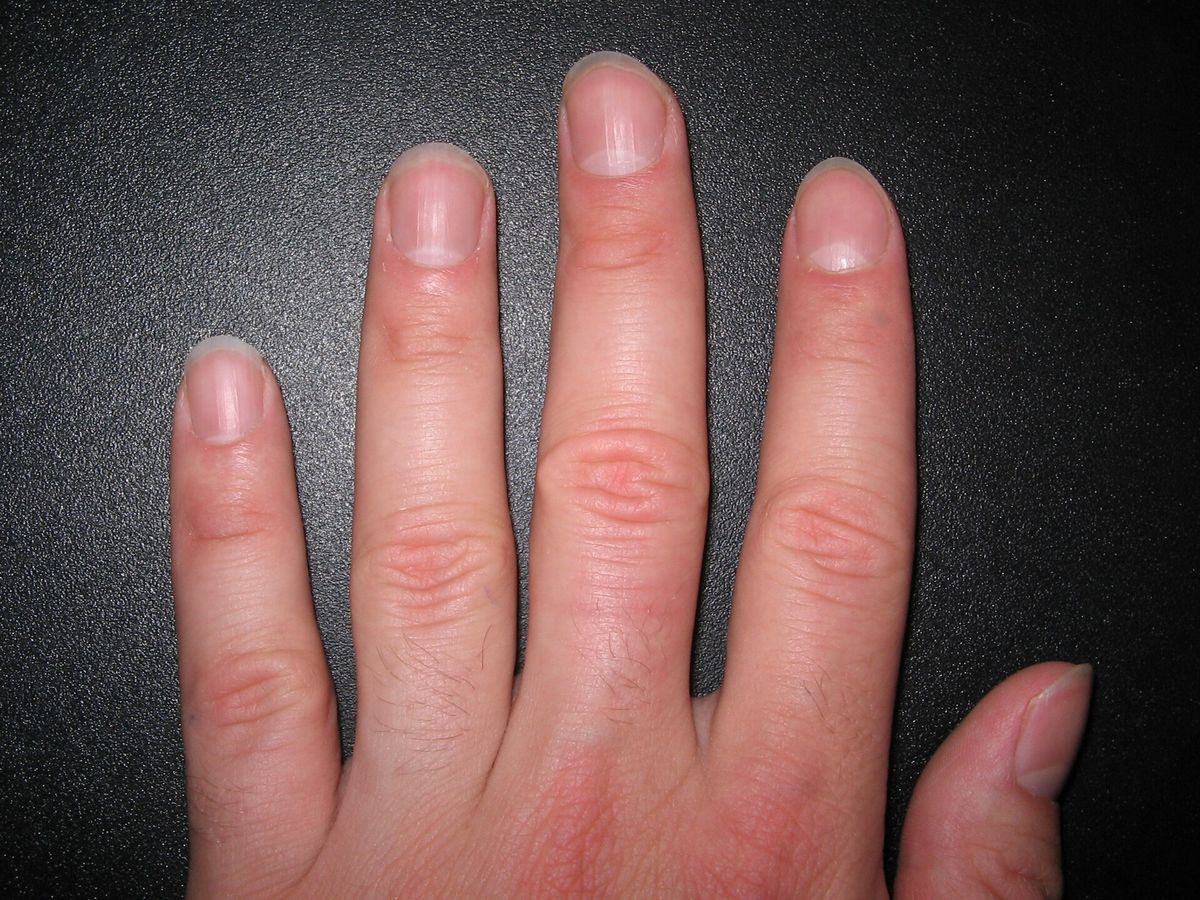
Also in the skin
Oil glands
Sweat glands
Sensory receptors
All of it together is the integumentary system.
Skin is one organ. How can it do five different jobs?
Photos: Nenad Stojkovic, CC BY 2.0 · Benreis, CC BY 3.0 · Kommissar, public domain
BEFORE YOU START
Get set up
1
Open mrsajdak.com/skin on your device.
2
Write your name, the date and your period on the worksheet.
3
Find the four tabs at the top of the lab. Each tab goes with one part of the worksheet.
4
Start on Tab 1. Do not skip ahead.

| Tab in the lab | Worksheet | Questions |
|---|---|---|
| 1. Inside the skin | Part 1 | 1 to 3 |
| 2. Touch map | Part 2 | 4 to 7 |
| 3. Sweat test | Part 3 | 8 to 11 |
| 4. Five jobs | Part 4 and Wrap it up | 12 to 14 |
Screenshot: mrsajdak.com/skin
TAB 1 · QUESTIONS 1 TO 3
Part 1. Inside the skin
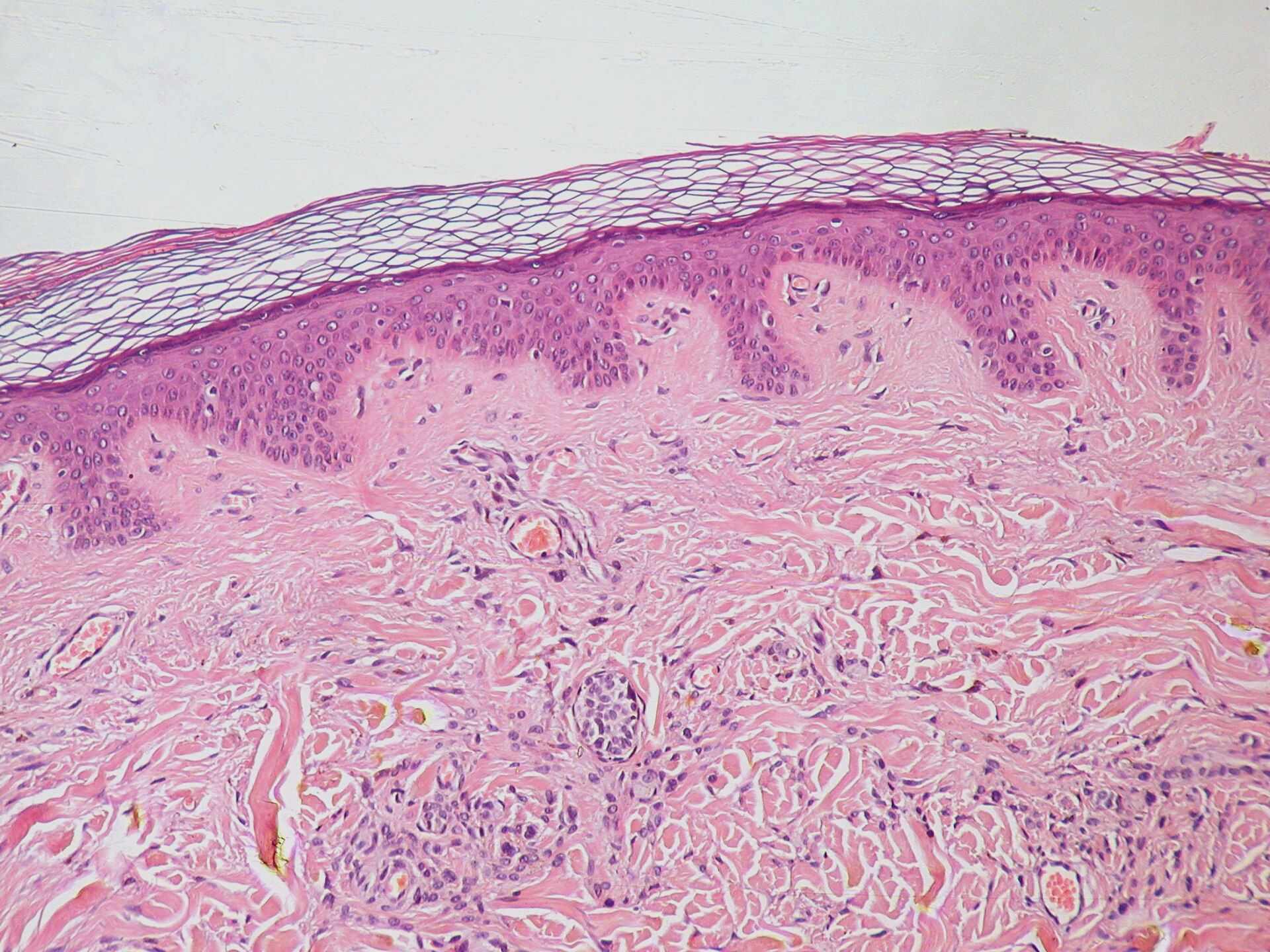
This is a real slice of skin under a microscope.
The lab has a drawing of a slice like it. You will take it apart. Then you will weigh it.
Photo: Kilbad, public domain
PART 1 · QUESTION 1
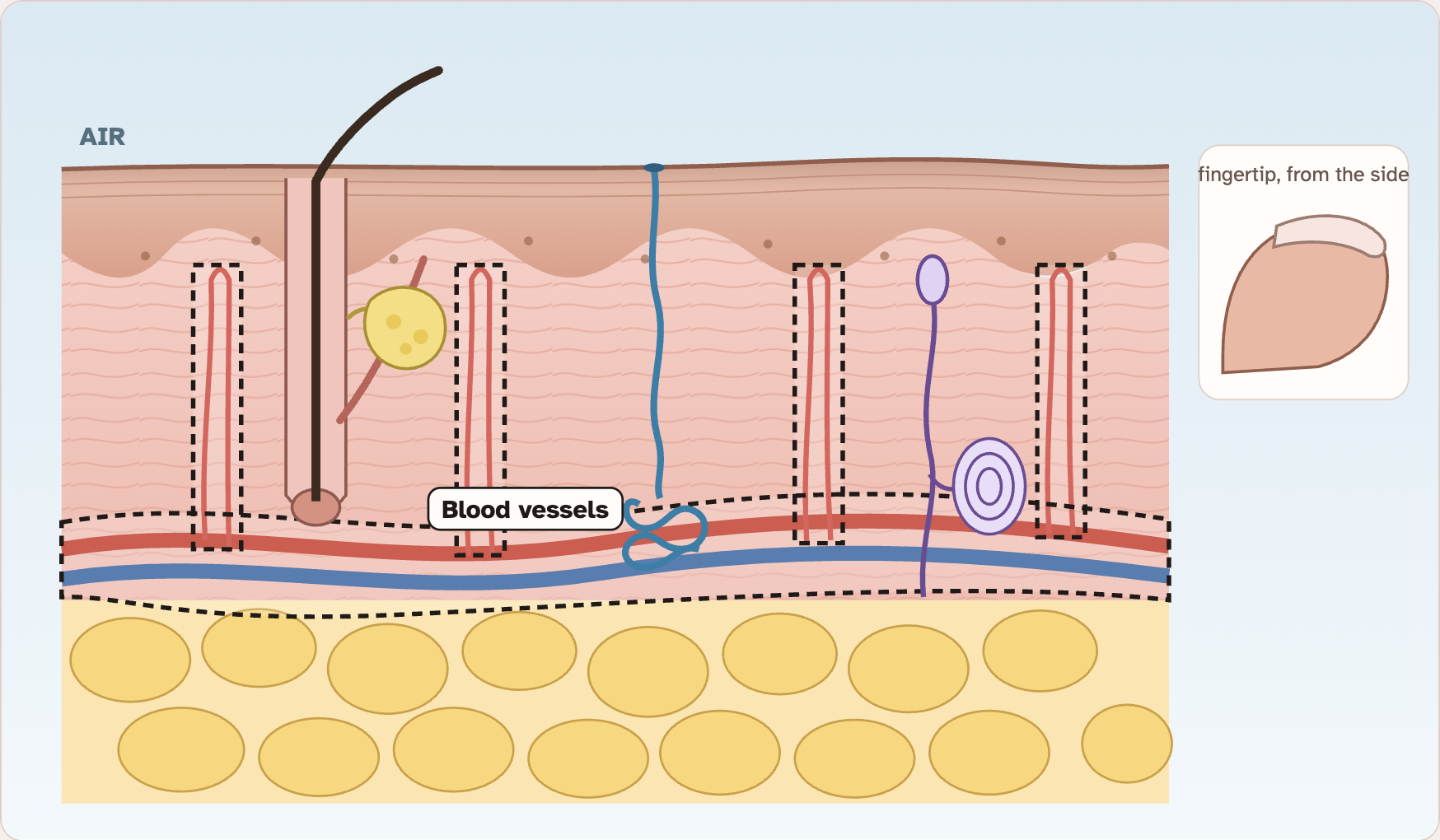
Click every part
1
Click a part of the slice. The box on the right tells you its name.
2
Read the small tag under the name. It says where the part belongs.
3
Tick that box in your table.
4
Keep going until the lab says Found 9 of 9 parts.
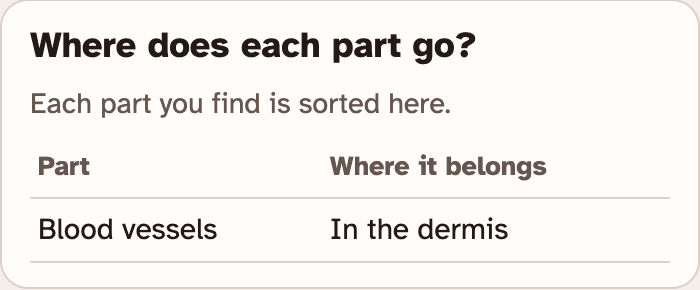
Where does each part go? lists every part you find.
Blood vessels are in the lab. They are not in your table.
Screenshots: mrsajdak.com/skin, Tab 1
PART 1 · QUESTION 2
Weigh it, spread it out
1
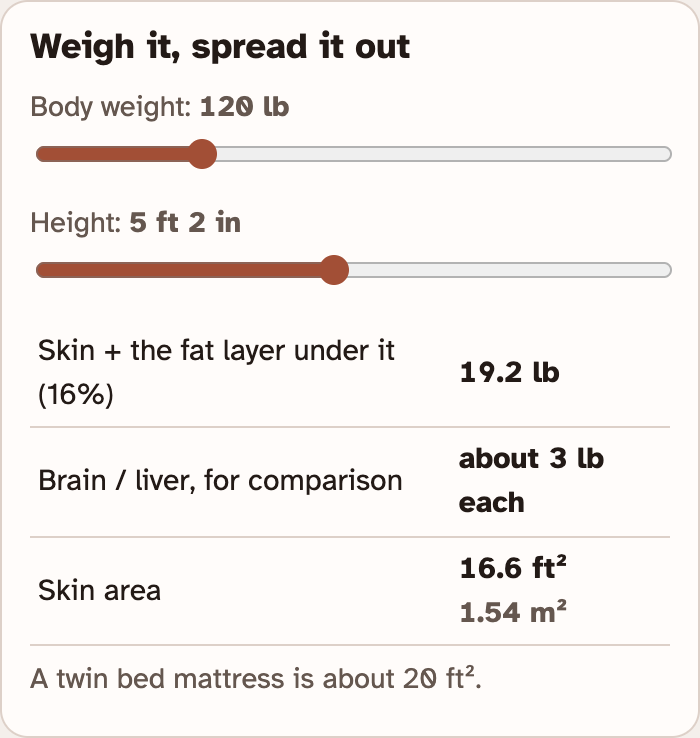
Find the Weigh it, spread it out box.
2
Slide Body weight to 150 lb. Slide Height to 5 ft 6 in.
3
Copy the weight of the skin and the fat layer under it.
4
Divide that weight by 3. That is how many brains it weighs.
5
Copy the Skin area in ft².
Example
A skin weighs 18 lb.
A brain weighs about 3 lb.
18 ÷ 3 = 6
That skin weighs as much as 6 brains.
These are not your numbers. Use your own.
Screenshot: mrsajdak.com/skin, Tab 1
PART 1 · QUESTION 3
Double the weight
1
Keep the height at 5 ft 6 in.
2
Slide Body weight to 300 lb. That is as far as it goes.
3
Copy the new skin weight and the new skin area.
4
Divide the new area by the old area. Did you get 2?
Example
The old number is 10.
The new number is 20.
20 ÷ 10 = 2
It doubled. If you get less than 2, it did not double.
These are not your numbers. Use your own.
THINK
What does it tell you?
The weight doubled.
Did the skin keep up?
Does a bigger body have more skin for each pound, or less?
TAB 2 · QUESTIONS 4 TO 7
Part 2. Touch map
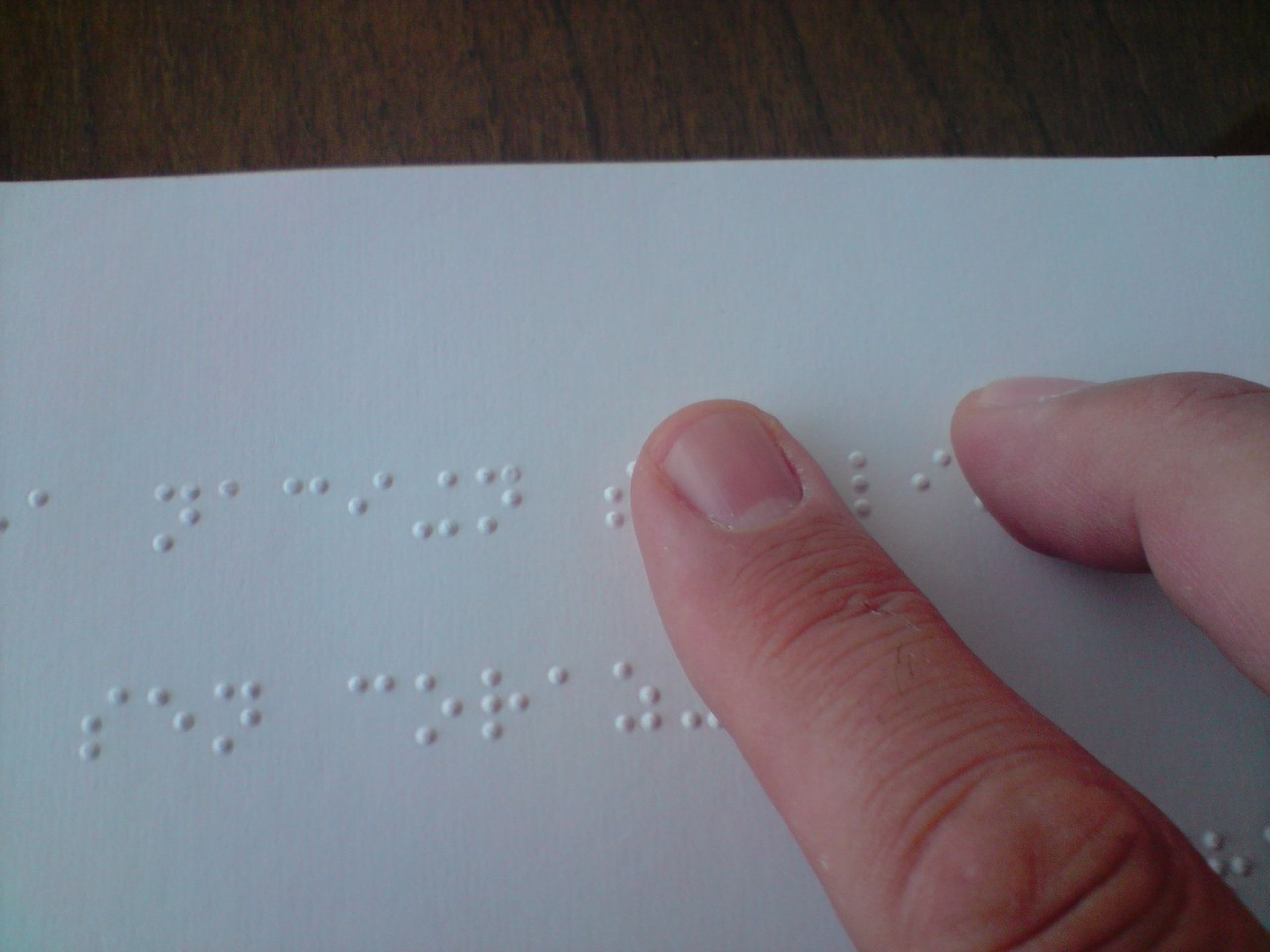
Your skin feels touch with sensory receptors.
Some places feel tiny details. Some places do not. You will test six places and find out which.
Photo: antonioxalonso, CC BY 2.0
PART 2 · TAB 2
How a touch test works
1
Pick a Site. Or click a dot on the body.
2
Set the Gap between the points. Use the slider, then −1 mm and +1 mm.
3
Press Touch with two points.
4
Read what the person says: “Two.” or “One.”
5
Keep Show the receptor patches OFF for now.
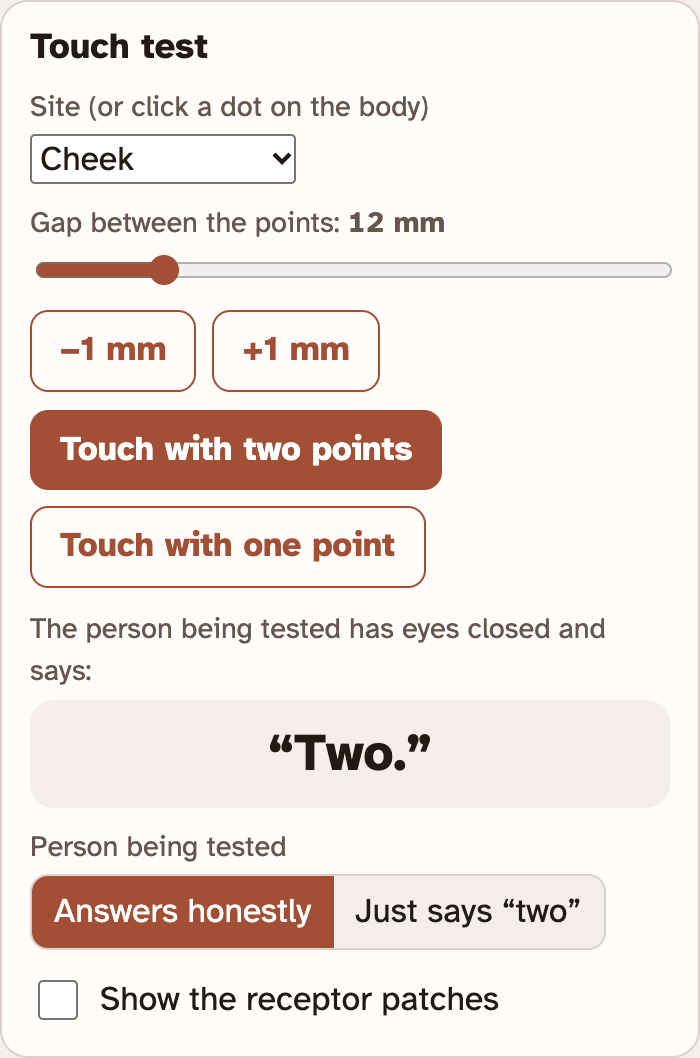
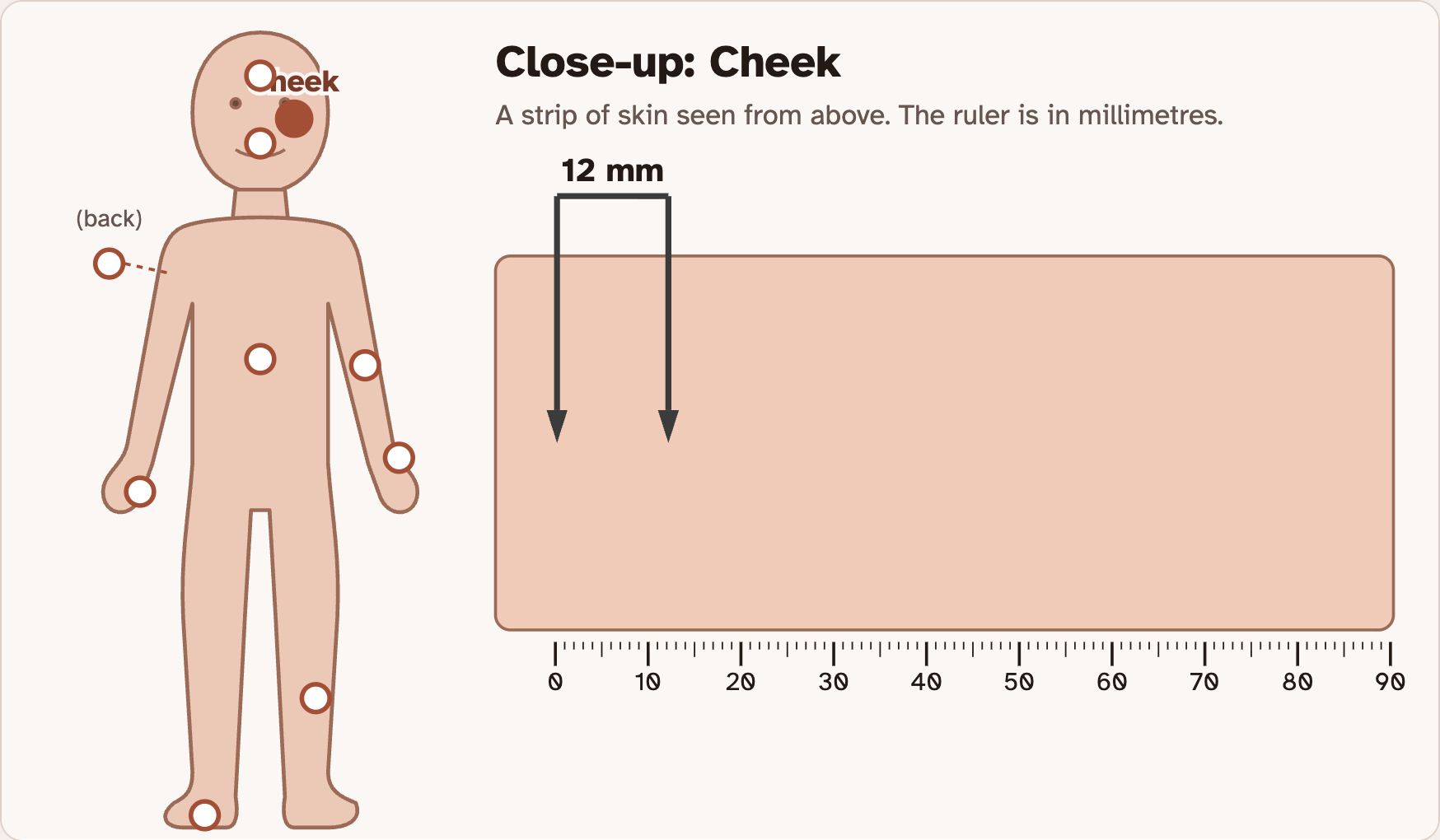
The person being tested has their eyes closed.
The gap can go from 1 mm to 60 mm.
Screenshots: mrsajdak.com/skin, Tab 2
PART 2 · QUESTION 4
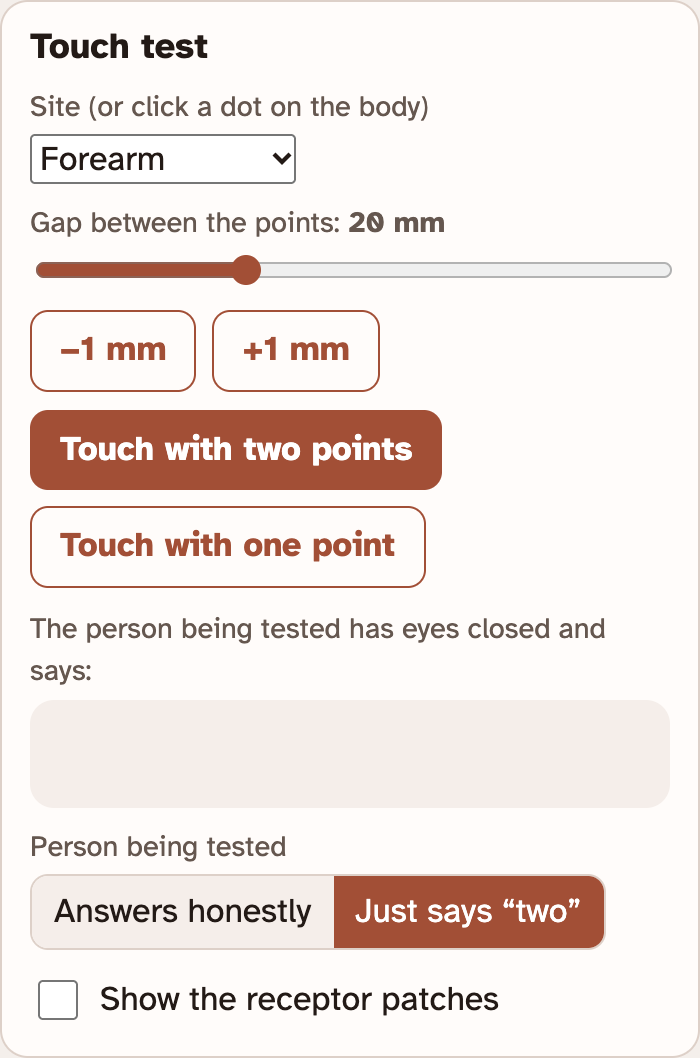
Catch a guesser
1
Find Person being tested. Pick Just says “two”.
2
Press Touch with one point.
3
Write what the person says.
4
Pick Answers honestly again before you go on.
THINK
Why use one point?
Only one point touched the skin.
What does the answer tell you about this person?
Could you trust their other answers?
Screenshot: mrsajdak.com/skin, Tab 2
PART 2 · QUESTION 5
Find the smallest gap
1
Pick Fingertip. Start with a wide gap.
2
Press Touch with two points. If they say “Two.”, make the gap 1 mm smaller.
3
Keep going until they say “One.”
4
The smallest gap is the last one that got “Two.” Write it down.
5
Do the same for Lip, Palm, Forearm, Back and Calf.
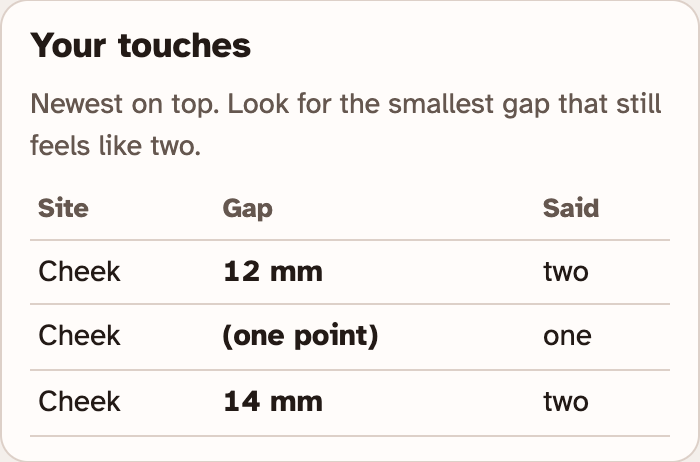
Your touches lists every touch. The newest is on top.
Example
At 28 mm they say “Two.”
At 27 mm they say “One.”
28 mm
The smallest gap is 28 mm.
These are not your numbers. Use your own.
Screenshot: mrsajdak.com/skin, Tab 2
PART 2 · QUESTIONS 6 AND 7
Why the gaps are different
QUESTION 6
Turn on the patches
Divide your forearm gap by your fingertip gap.
Tick Show the receptor patches. Set 20 mm on the forearm. Then on the fingertip.
How many squares do the two points press? Use the word receptor.
QUESTION 7
Who can read Braille?
Braille dots are about 2.5 mm apart.
Look at your Question 5 table. Which sites could feel two dots that close?
Use a number as your proof.
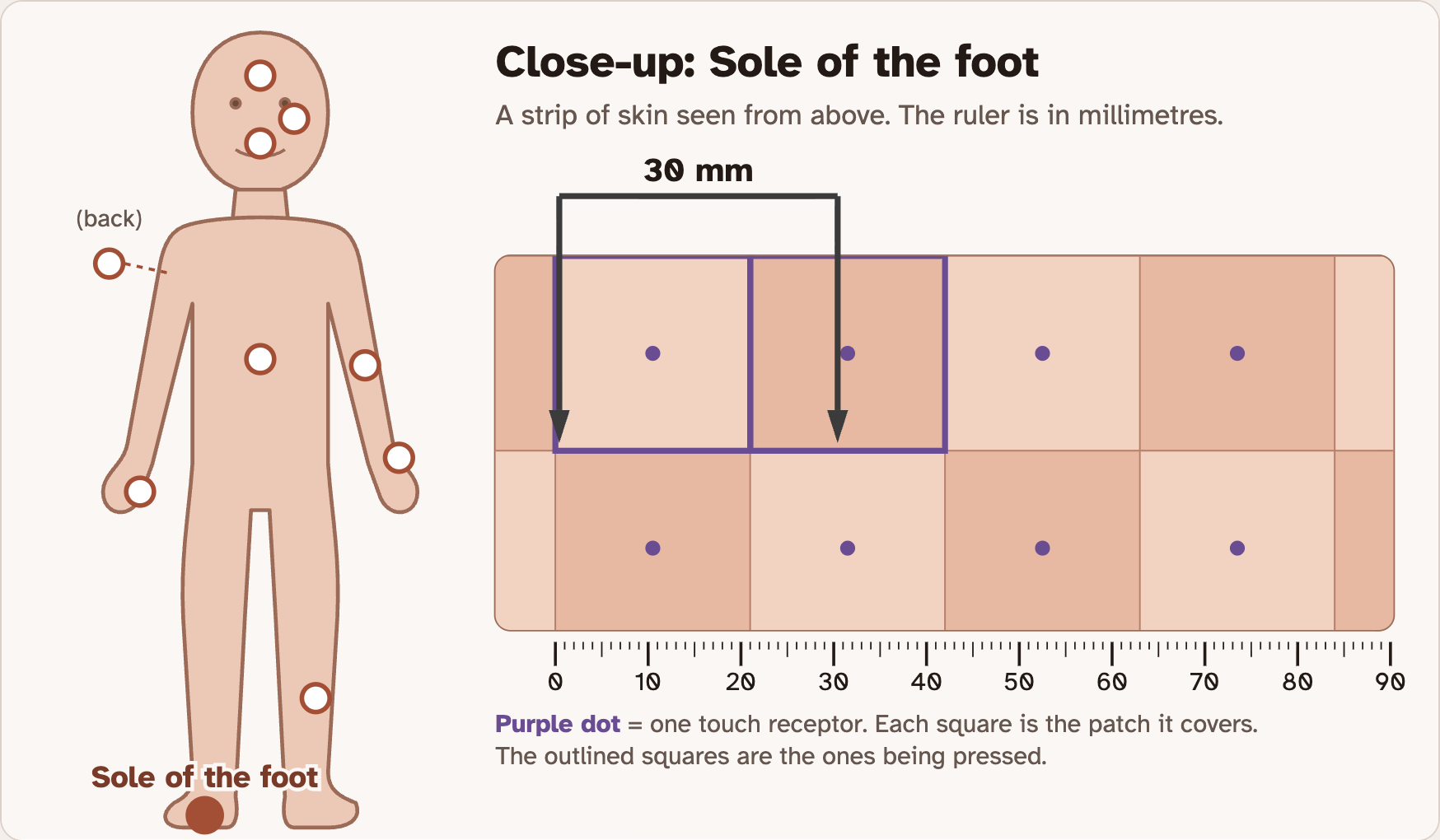
A purple dot is one touch receptor. Each square is the patch it covers.
This picture is the sole of the foot. It is not in your table.
Screenshot: mrsajdak.com/skin, Tab 2
TAB 3 · QUESTIONS 8 TO 11
Part 3. Sweat test
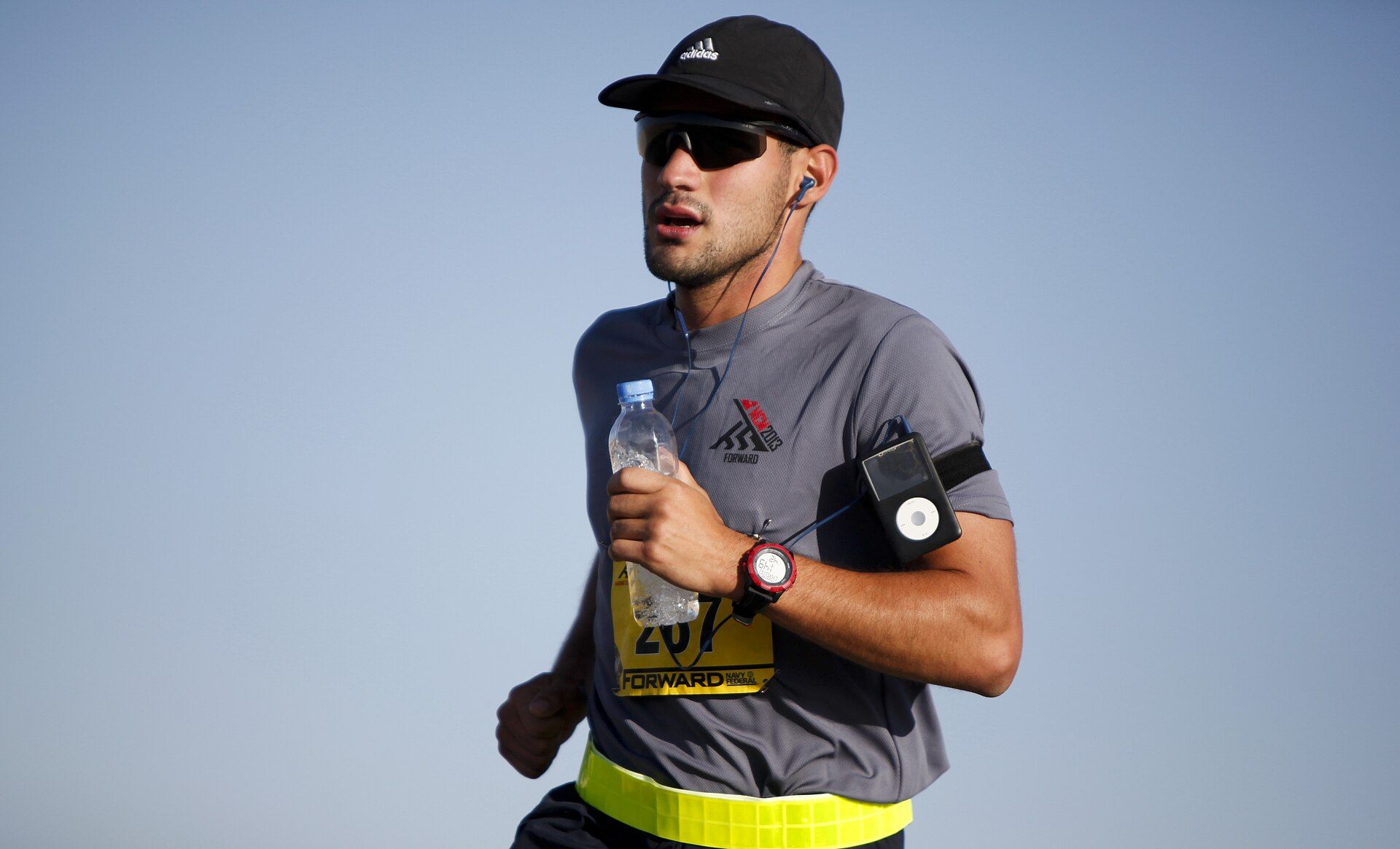
A runner goes for 30 minutes on a warm day.
You will change the air. Then you will find out how sweat really cools the body.
Photo: Sgt. Bobby Yarbrough, U.S. Marine Corps
PART 3 · TAB 3
Set the air, then run
1
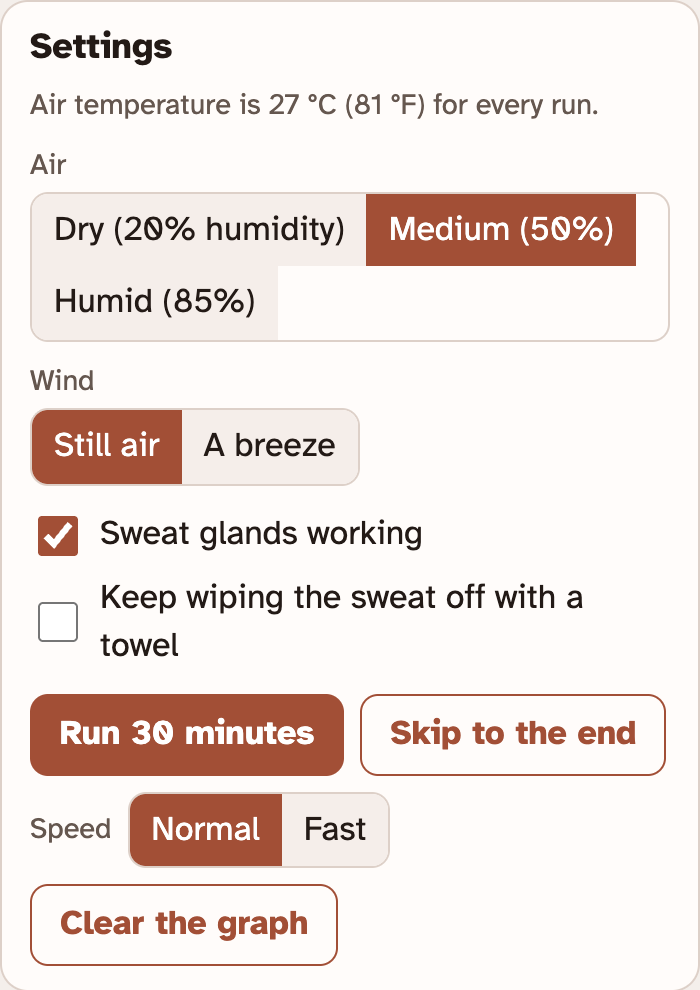
In Settings, pick the Air and the Wind.
2
Look at the two check boxes: Sweat glands working and Keep wiping the sweat off with a towel. Set them the way your table says.
3
Press Skip to the end to get the numbers. Press Run 30 minutes to watch it happen.
4
Find Your runs. It has the numbers at minute 30.
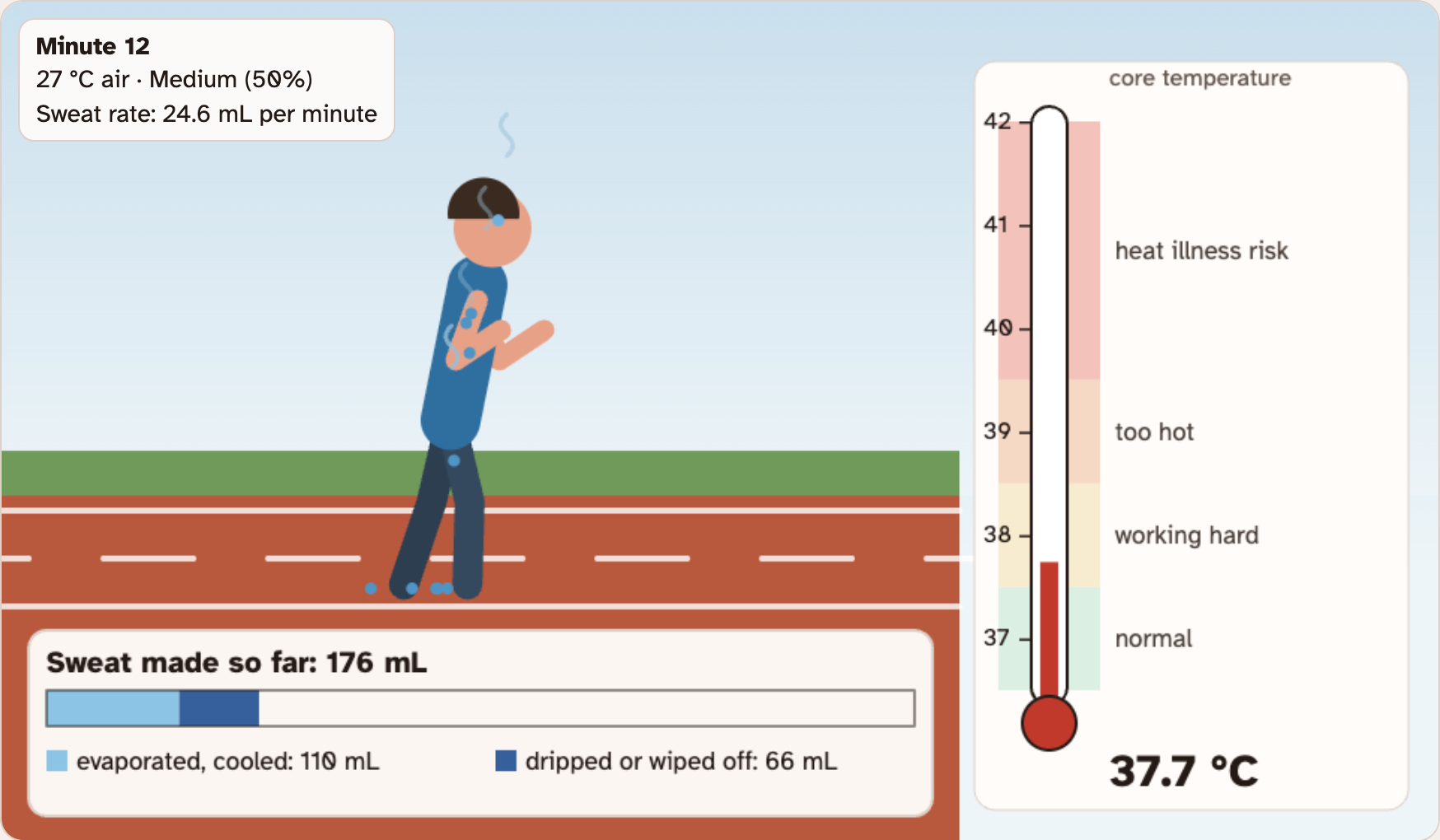
The box in the corner shows the minute and the sweat rate.
The air is 27 °C (81 °F) every time.
Screenshots: mrsajdak.com/skin, Tab 3
PART 3 · QUESTION 8
Your five runs
| Row | Air | Wind | Sweat glands | Towel |
|---|---|---|---|---|
| 1 | Dry (20% humidity) | Still air | on | off |
| 2 | Humid (85%) | Still air | on | off |
| 3 | Humid (85%) | A breeze | on | off |
| 4 | Dry (20% humidity) | Still air | OFF | off |
| 5 | Dry (20% humidity) | Still air | on | ON |
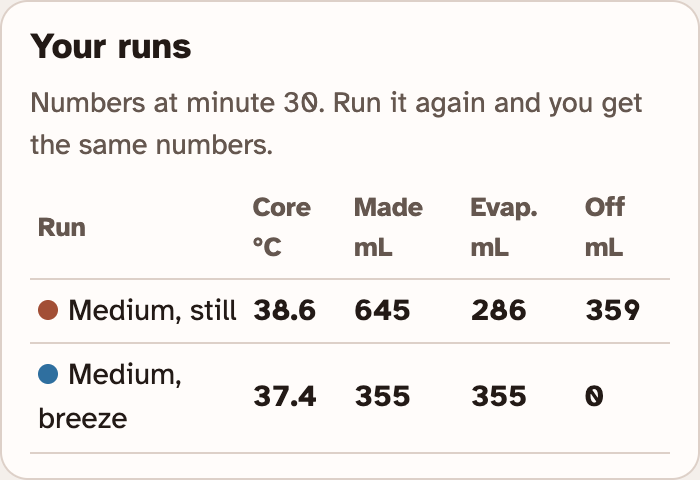
Evap. is sweat that evaporated. Off is sweat that dripped or was wiped away.
Your runs keeps the last 6 runs.
Screenshot: mrsajdak.com/skin, Tab 3
PART 3 · QUESTIONS 9 TO 11
What does sweat really do?
QUESTION 9
More
More sweat, but hotter
Compare row 1 and row 2 in your table.
Find the two Evaporated numbers. Use both in your answer.
QUESTION 10
Rate
The glands turn up
Set dry, still air. Press Run 30 minutes.
Read Sweat rate in the corner box at minute 0 and at minute 30. What changed in the body first?
QUESTION 11
Cold?
“Sweat cools you because it is cold.”
Read the Is sweat cold? box in the lab.
Then look at your towel row. Find two facts that show your friend is wrong.
TAB 4 · QUESTIONS 12 AND 13
Part 4. Five jobs
The skin has five jobs.
You will read nine real moments. For each one, find the part that does the work. Then name the job.
Photo: EverJean, CC BY 2.0
PART 4 · QUESTION 12
Nine moments
1
Read the moment.
2
Step 1. Click the part of the slice that does it. Wrong? Try another part.
3
Step 2. Pick the job.
4
Read why. Then write the part and tick the job on your worksheet.
5
Press Next moment.
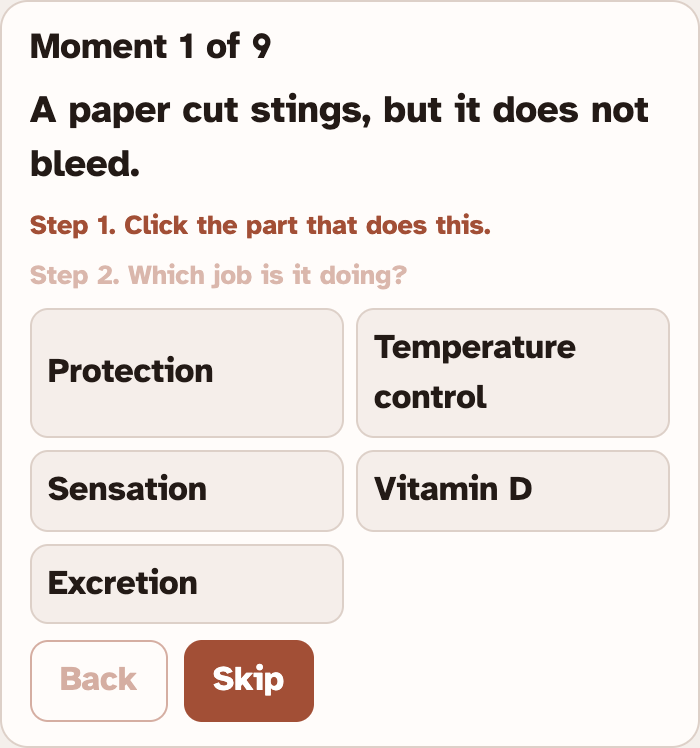
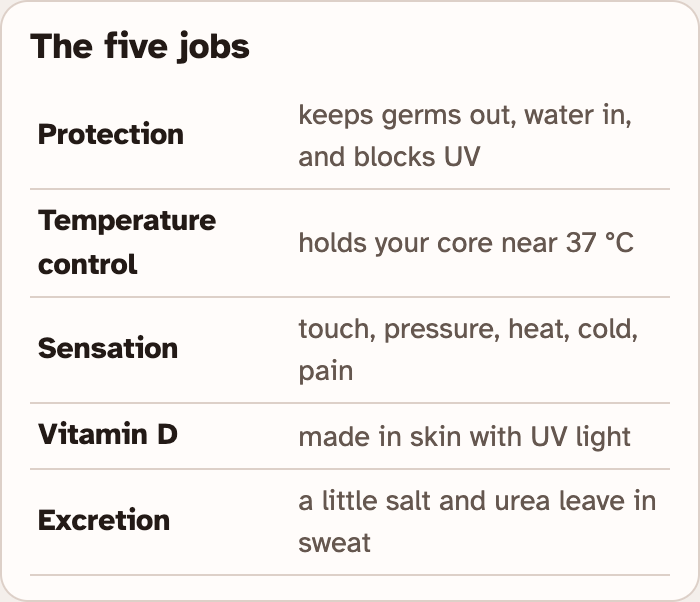
Your worksheet shortens the names. Temp. is Temperature control.
Your moments lists the ones you finish.
Screenshots: mrsajdak.com/skin, Tab 4
PART 4 · QUESTION 13
The paper cut
QUESTION 13
Why no blood?
Go back to moment 1. Read the lab’s reason again.
Now look at the slice. Find the red blood vessels. How high do they reach?
What does that tell you about how the epidermis is built?
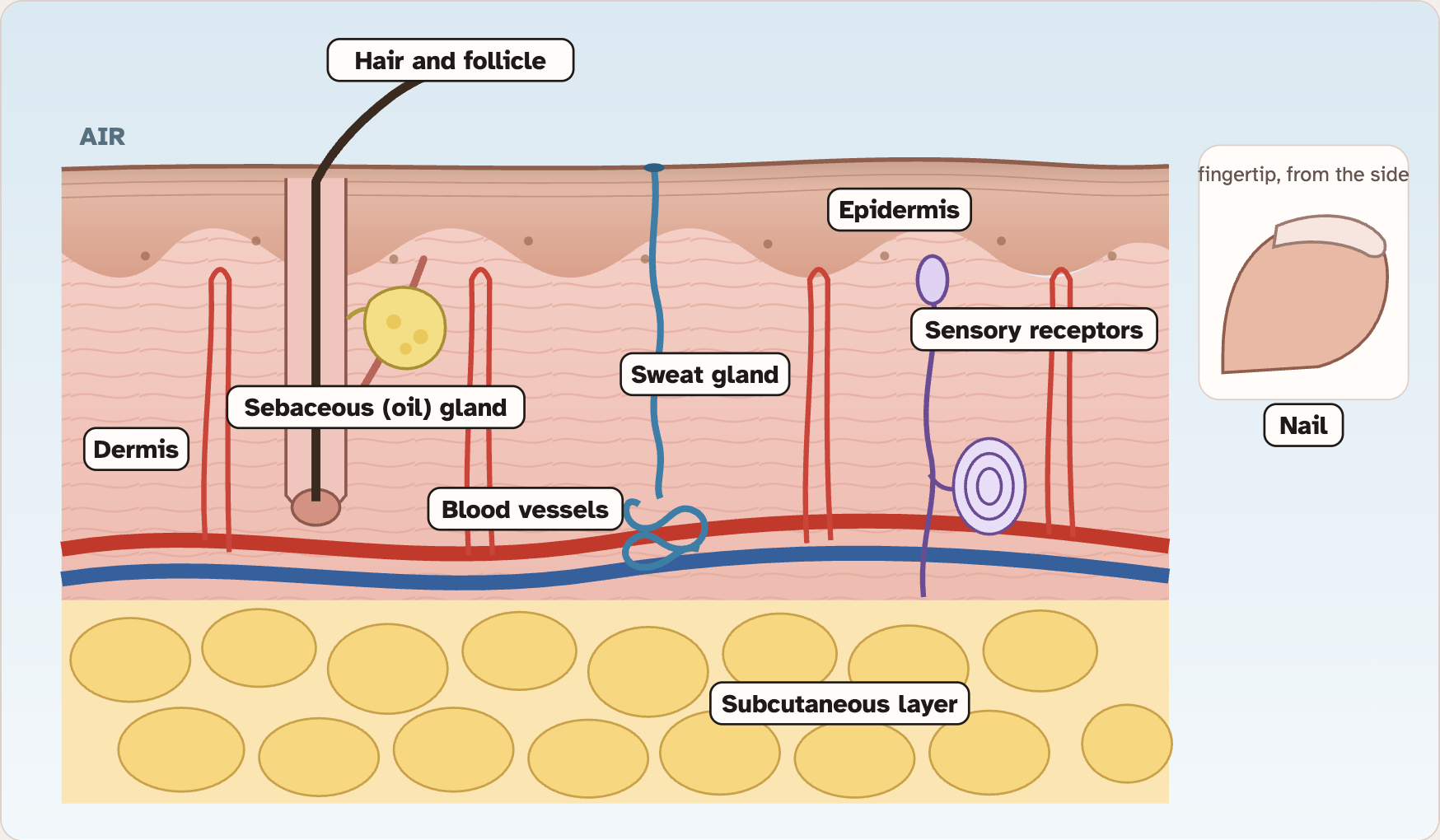
This is Tab 1 with Show every label ticked.
Screenshot: mrsajdak.com/skin, Tab 1
WRAP IT UP · QUESTION 14
Is the skin built for its jobs?
The claim
“The skin is built for its jobs.”
Evidence 1
Pick a number or a fact from one tab. Your Question 5 table works well.
Evidence 2
Pick one from a different tab. Your Question 8 table works well.
Reasoning
Say how each part is built. Then say how that lets it do its job.
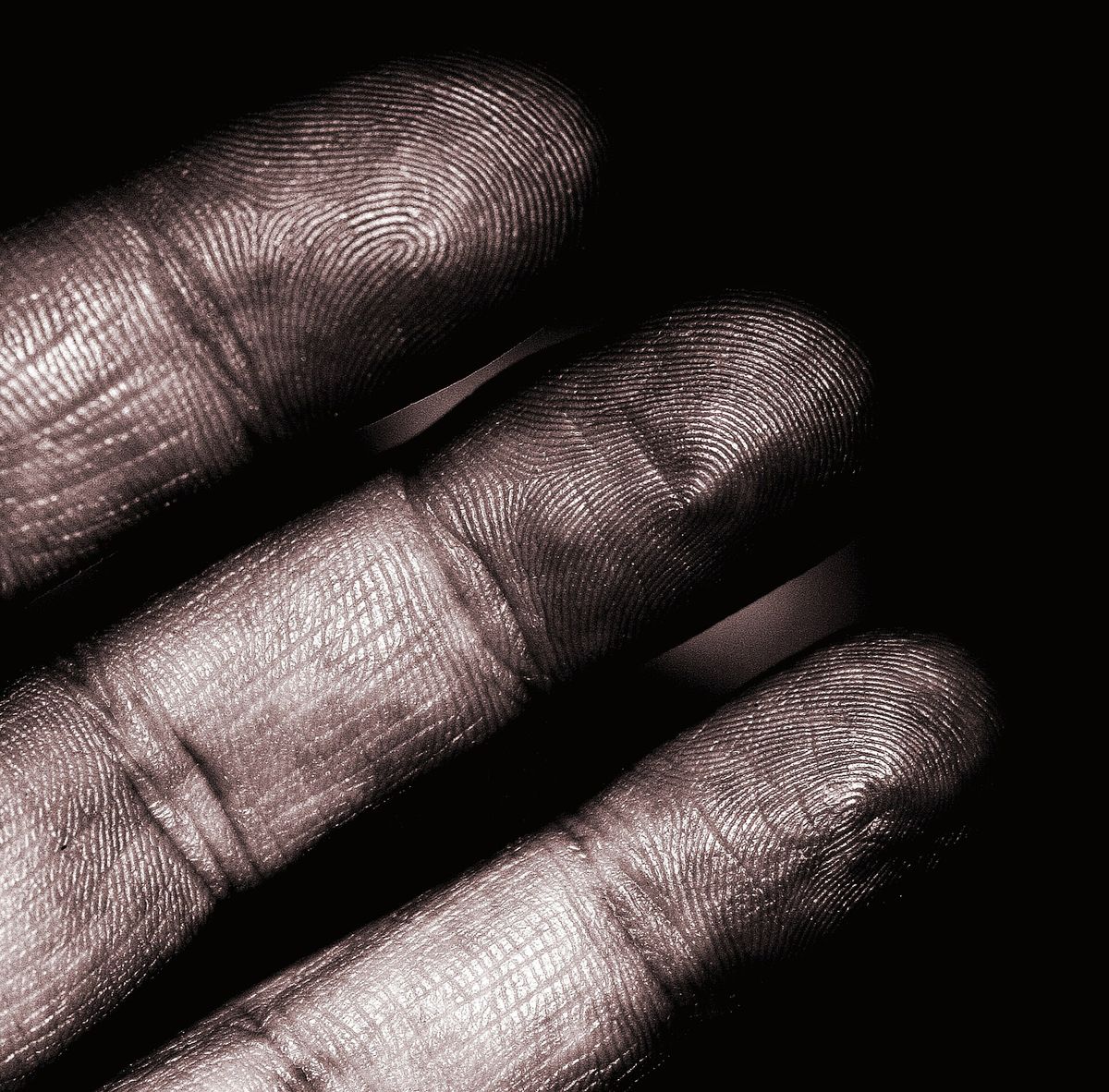
The ridges on your fingertips. How might they fit one of the skin’s jobs?
Photo: D. Sharon Pruitt, CC BY 2.0

LAST CHECK
Before you hand it in
Name, date and period are on top.
All four tables are full.
Questions 1 and 12 have one tick in each row.
Your answers use numbers from your own tables.
Photo: Shixart1985, CC BY 2.0